Call Us: 954-371-1370 Email: info@powerfenceinc.com 902 SW 2nd Place, Pompano Beach, FL 33069
Licensed & Insured - Broward Lic. 20-F-21831-X
Palm Beach Lic. U-22529

Delray Beach · Palm Beach County

Delray Beach
Fence Company

From waterfront homes and historic neighborhoods to pool enclosures, custom gates, fence replacements and permit coordination — Power Fence helps Delray Beach homeowners navigate the process from estimate to final inspection.

20+ yrsServing South Florida
500+Five-star reviews
Licensed & InsuredBroward + Palm Beach

Before you install

What homeowners should know before installing a fence in Delray Beach.

A fence in Delray Beach doesn't exist by itself. It has to work for the property, the neighborhood and the streetscape — and depending on where you are, that can mean a historic preservation review, a floodway assessment, or a sightline a driver depends on. The dimensional rules here are actually generous compared to most of the county. It's the context around them that needs planning. Here's each piece in plain English, with the measurements that matter.

01

How tall, and where

Delray Beach allows more height than most South Florida cities — up to eight feet on interior side and rear lines. What it holds back is anything facing a street: both the front yard and a street-side yard cap at six.

Different parts of a property may allow different fence heights.
  • Front yard — 6′ maximum
  • Street side yard — 6′ maximum
  • Interior side yard — 8′ maximum
  • Rear yard — 8′ maximum
Fig. 01 — Height by yard

02

The driveway visibility triangle

Where your driveway meets the street, a ten-by-ten triangle comes off the corner on each side. Inside it, nothing may obstruct the view above three feet — so a tall fence run has to stop short, or step down.

Fence height may be reduced near driveways to maintain visibility.
  • Triangle legs — 10′ by 10′
  • Maximum obstruction height — 3′
  • Applies to — fences, walls, hedges and columns
Fig. 02 — Driveway visibility triangle
03

The 25-foot corner visibility triangle

At an intersection the triangle gets much larger — 25 feet back along each street line. The three-foot ceiling is the same, but the area it covers takes a real bite out of the most useful corner of a corner lot.

Corner lots often have additional fence restrictions.
  • Triangle legs — 25′ by 25′
  • Maximum obstruction height — 3′
  • Plan the step-down into the design, not around it
Fig. 03 — Corner lot visibility triangle
04

Waterfront & floodway properties

On a canal or waterway lot, the fence stops being only a zoning question. If the property sits in a floodway, a fence that obstructs the movement of floodwater may not be permitted at all — which usually means trading a solid panel for an open pattern water can pass through.

Waterfront properties should always be reviewed individually before installation.
  • Floodway areas — may require additional review
  • Obstructing designs — may not be permitted
  • Open-pattern fencing — the usual solution
  • Seawall & canal edge — verified from the survey
Fig. 04 — Waterfront lot section
05

Historic district review

In Delray Beach's historic districts the question shifts from dimensions to appropriateness. A fence permit may need a preservation review and a Certificate of Appropriateness first — and the design is judged on how it relates to the building and the street it belongs to.

Historic districts often involve additional approval requirements.
Fig. 05 — Historic district review

Step one

Historic preservation review

Design, material and placement are reviewed before the building permit is issued — not after.

The approval

Certificate of Appropriateness

The document that clears the work to proceed. It's in addition to the permit, not instead of it.

The standard

Architectural compatibility

Picket profile, spacing, post caps, height and finish are expected to relate to the building.

The context

Neighborhood character

How the fence reads along the streetscape matters as much as how it reads on your lot.

06

Pool barrier requirements

Pool barriers are a life-safety item, and the inspection looks hard at the details most homeowners never think about — the gap between pickets, how high the latch sits, and which way the gate swings.

Pool barrier inspections focus on gate hardware and safety details.
  • Minimum barrier height — 48″
  • Latch height — 54″ minimum
  • Maximum opening — no 4″ sphere may pass
  • Gate — self-closing, self-latching, swings away from the pool
Fig. 06 — Pool barrier & gate
07

Which way does the fence face?

The finished side faces outward — toward the street or the neighbor — and the posts and rails face in, toward your house. It's a small detail that fails an inspection when it's wrong, and it's the most common correction we're called in to make.

Fence orientation is part of code compliance.
  • Finished side — faces outward
  • Posts & rails — face inward
  • Applies to street frontages and shared lines alike
Fig. 07 — Cross-section, orientation

The short version

Delray Beach fence rules, at a glance.

The numbers we plan around on every Delray Beach project. Every site is different — these are the typical starting points.

6′Front yard
fence
6′Street side
fence
8′Interior side
fence
8′Rear yard
fence
10′Driveway visibility
triangle
25′Corner visibility
triangle
3′Max height inside
a triangle
48″Pool barrier
minimum
54″Pool gate
latch height
4″Maximum
opening
811Utility locates
before digging
Self‑ClosePool gates self-close
& self-latch
Faces OutThe finished side of the fence must face outward — toward the street or the neighbor
May ApplyHistoric preservation review and a Certificate of Appropriateness in designated districts
Additional ReviewWaterfront and floodway properties — designs that obstruct floodwater may not be permitted
Permit RequiredFence permits require a survey and a site plan showing location, height, material and gates

After you sign

What happens next.

From your first estimate to final inspection, every step has a real person attached to it — and we tell you exactly where your project is.

  1. 01 · Estimate & Site Visit

    We visit the property, measure the area and check for visibility triangles, waterfront or floodway conditions, historic-district designation and easements.

  2. 02 · Survey & Documentation

    We review the survey, property lines, seawall and canal edges and rights-of-way against the proposed fence layout.

  3. 03 · HOA & Permit Coordination

    Nikki runs the application through the City of Delray Beach, historic preservation review where it applies, and your HOA.

  4. 04 · Approval Complete

    Permits in hand, any Certificate of Appropriateness issued, HOA letter on file, product approvals accepted and install date scheduled.

  5. 05 · Installation

    Our own crews install — never unlicensed subs. Site is cleaned daily.

  6. 06 · Final Inspection

    We meet the city inspector on-site and close the permit. You get the final paperwork.

  7. 07 · Warranty & Support

    Manufacturer warranties on materials, our own workmanship guarantee and a real number to call.

Nikki, Permit Coordinator

Meet your project liaison

Nikki

HOA & Permit Coordinator

Nikki runs the back-of-house side of every Delray Beach project — submitting plans to the city, tracking historic preservation review and Certificates of Appropriateness, preparing HOA architectural packages, assembling product approvals, coordinating surveys and scheduling inspections. She's the one keeping your project moving while our crews and you focus on the install itself. If you ever wonder where things stand, she's the person to call.

The bigger picture

Character & context matter.

Delray Beach is a city people choose deliberately, and it shows in the details — the bungalow blocks near Pineapple Grove, the canal streets in Tropic Isle, the tree canopy around Lake Ida. A fence here is read as part of the streetscape, not just as a boundary. So the useful question at the estimate isn't which material is best; it's what this particular property, on this particular street, can support — and what will still look right in a decade.

  • Historic neighborhoods & preservation review
  • Downtown Delray character & streetscape
  • Waterfront & floodway properties
  • Visibility requirements at corners and driveways
  • Pool safety & barrier compliance
  • Long-term property improvements

Different parts of town, different plans

Delray Beach is not one market.

Six areas we work in most often. Each carries its own conditions — historic review, canal frontage, corner lots, mature canopy — that shape the plan well before we talk materials.

Established

Lake Ida

  • Mature tree canopy
  • Larger lots
Waterfront

Tropic Isle

  • Canal frontage
  • Floodway review
Family

Delray Shores

  • Backyard improvements
  • Fence replacements
Historic

Pineapple Grove Area

  • Preservation review
  • Architectural compatibility
Coastal

The Seagate Area

  • Coastal exposure
  • Streetscape character
East Delray

Waterfront Properties

  • Seawall & canal edges
  • Individual site review

Delray Beach project spotlights

Recent jobs.

A representative cross-section of the work we do in Delray Beach — each one with its own constraints, its own approvals, its own outcome.

Waterfront
01 · Waterfront installation · Tropic Isle

A fence the floodway would accept

Challenge

A canal-front lot in a floodway, where the homeowner wanted a solid privacy panel to the seawall — a design that obstructs floodwater and wouldn't clear review.

Solution

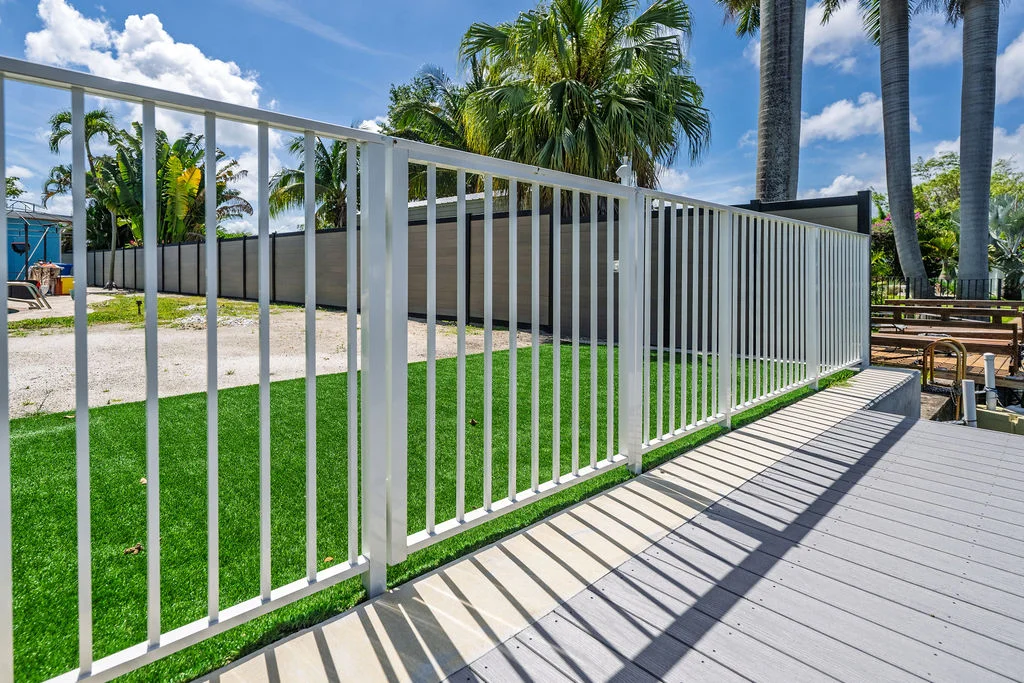
Open-pattern marine-grade aluminum through the waterfront zone with stainless hardware, transitioning to privacy panels on the interior side lines.

Outcome

Approved on the first submission, and the view down the canal stayed open.

Historic district
02 · Historic district · Pineapple Grove area

A Certificate of Appropriateness, first try

Challenge

A 1920s bungalow in a designated district, where the fence needed preservation review before a building permit could be issued.

Solution

Wood picket with a profile, spacing and cap detail drawn to relate to the porch balustrade, submitted with elevations and material samples.

Outcome

Certificate of Appropriateness issued without revisions — the fence reads like it was always there.

Pool barrier
03 · Pool barrier · Delray Shores

Code-compliant pool enclosure

Challenge

An older enclosure that failed on three counts — picket gaps over 4″, a latch below 54″, and a gate that swung toward the water.

Solution

New 48″ aluminum barrier with no opening a 4″ sphere can pass, self-closing gates latching at 54″ and swinging away from the pool.

Outcome

Passed the barrier inspection on the first visit. Insurance compliance handled.

Corner lot
04 · Corner lot · Lake Ida

Privacy that clears the 25-foot triangle

Challenge

A corner lot fronting two streets, with the 25′ visibility triangle taking the most useful corner of the yard and a 3′ ceiling inside it.

Solution

Triangle staked from the survey, full height held outside it, and a 3′ decorative return through the corner detailed as part of the design.

Outcome

Permit issued without comments. Sight lines clear, back yard fully private.

Replacement
05 · Fence replacement · The Seagate area

Replacing a failed line, facing the right way

Challenge

The previous fence had been built with the framing facing the street, and coastal exposure had taken the hardware apart well before the wood.

Solution

New line with the finished side turned outward, stainless fasteners throughout and posts set to handle the salt-air environment.

Outcome

Passed inspection on the first visit, and the street elevation improved noticeably.

Custom gate
06 · Custom gate · East Delray

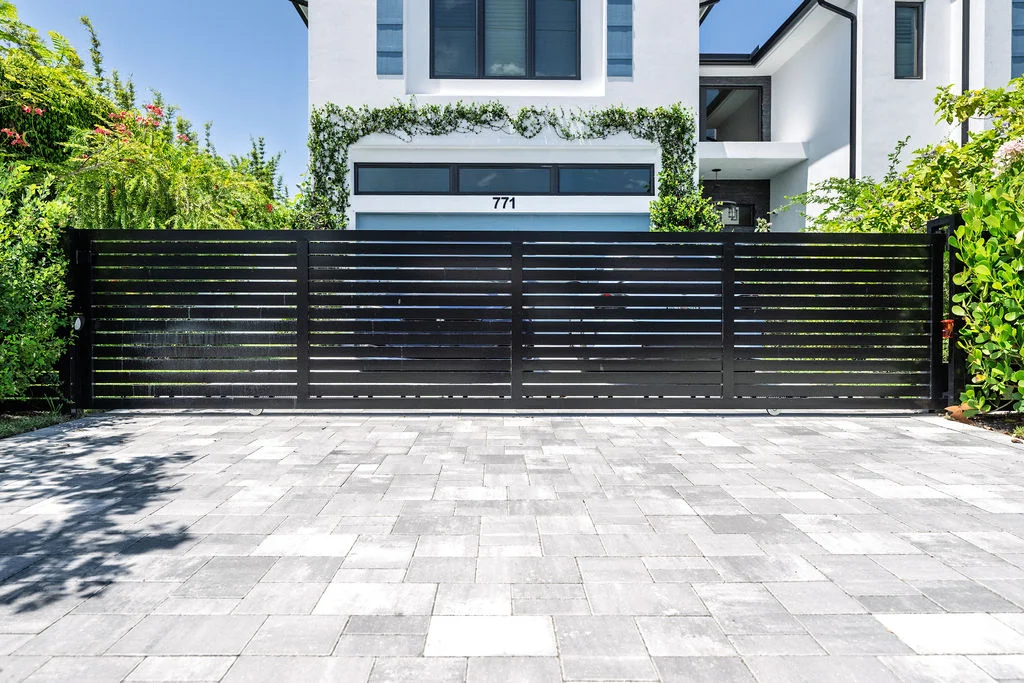
In-house welded aluminum driveway gate

Challenge

A driveway entry where the gate couldn't swing toward the street and the columns couldn't sit inside the 10′ driveway visibility triangle.

Solution

Fabricated in our own shop and powder-coated, hung to swing inward, with column placement and planting kept clear of the triangle.

Outcome

One-of-one gate, automated with safe-stop sensors and keypad entry.

Fence solutions for Delray Beach

Every material we install.

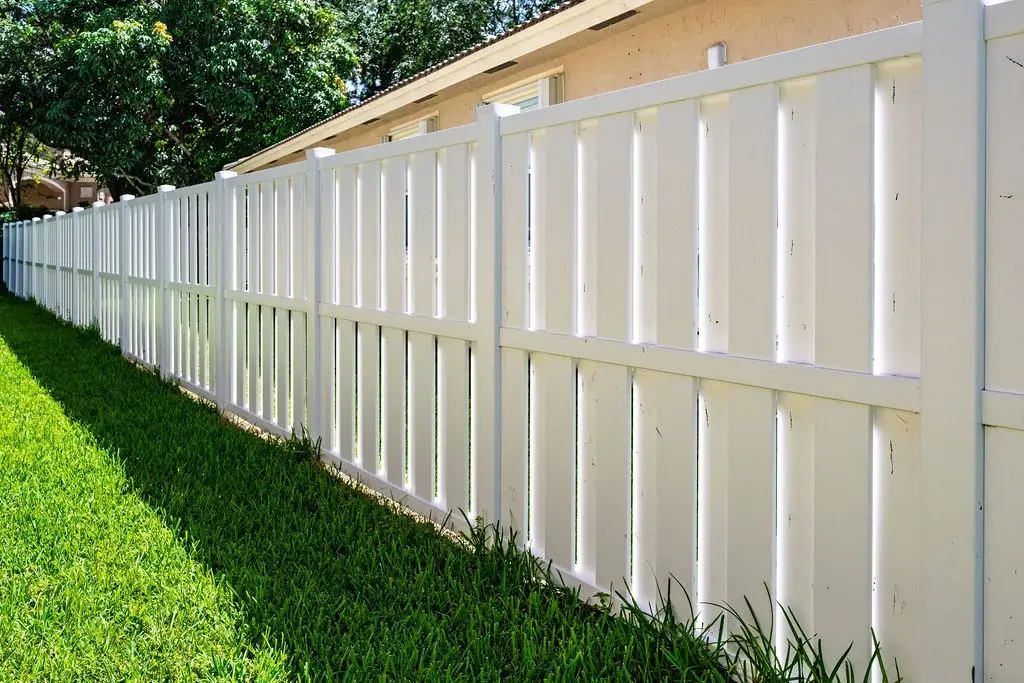
No "preferred" Delray Beach fence material here — the right answer depends on which yard the fence sits in, historic or floodway review, coastal exposure, pool-barrier needs, privacy goals, maintenance expectations and budget. We talk through every option and recommend what fits the property.

01

Vinyl Fencing

Explore
02

Aluminum Fencing

Explore
03

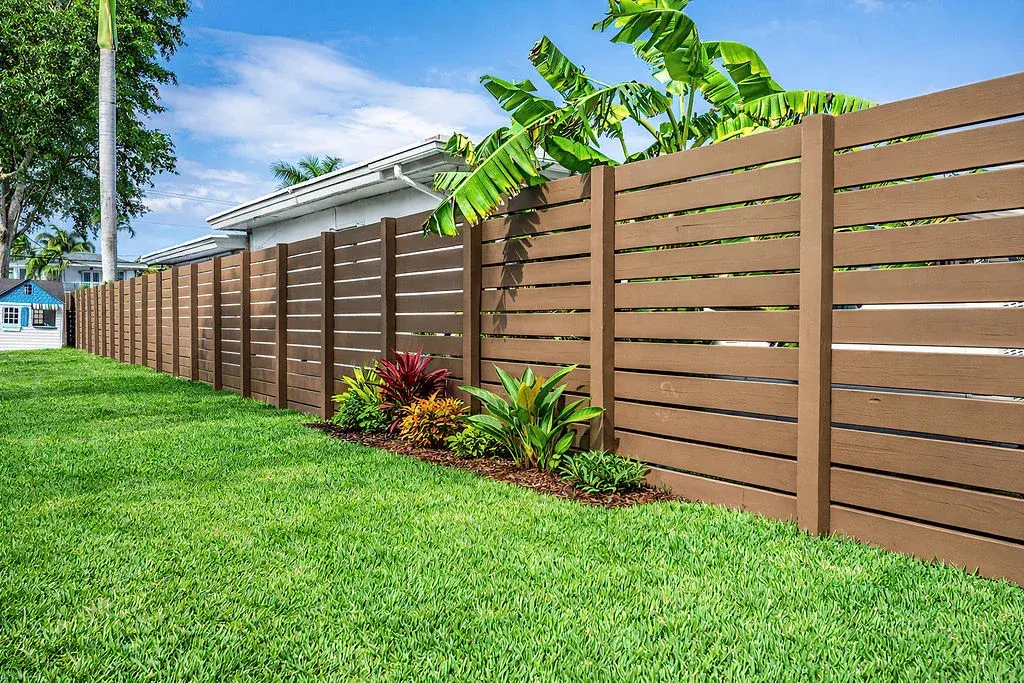
Wood Fencing

Explore
04

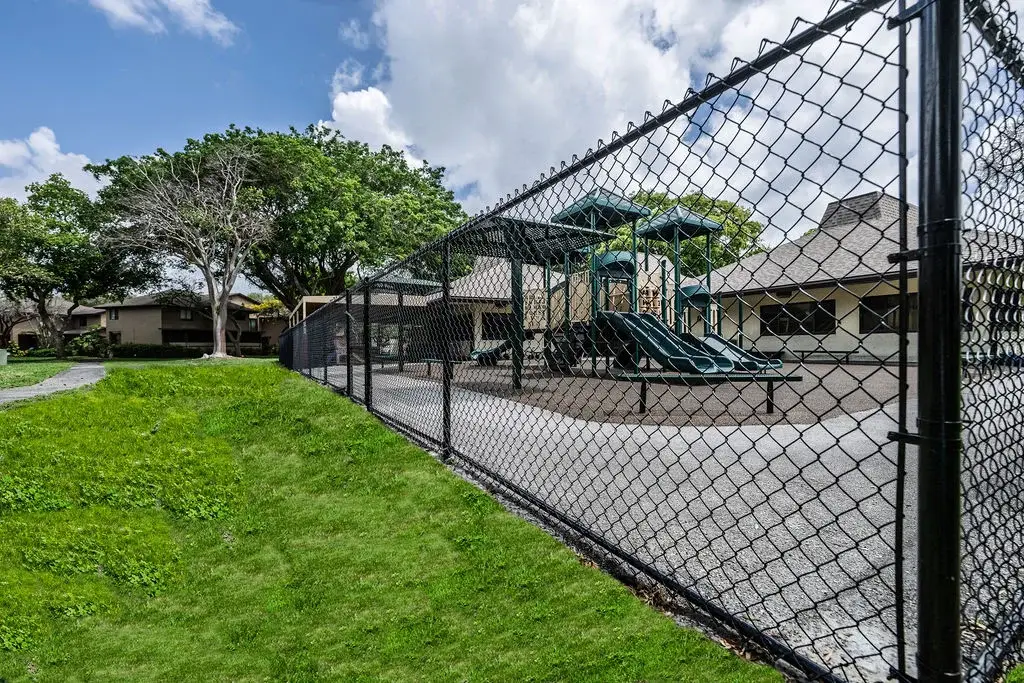
Chain Link Fencing

Explore
05

Composite Fencing

Explore
06

Gates & Automation

Explore
07

Commercial Fencing

Explore
More

Not sure which?

Get a free estimate

Permits & approvals

We help navigate the process.

Surveys, site plans, permit coordination, historic review, HOA approvals, product approvals and inspections — handled end to end. You're on the project, not the paperwork.

Nikki, Permit Coordinator

Coordinator

Nikki handles every Delray Beach permit submission and HOA package end to end.

  1. 01

    Property surveys

    A current survey establishes property lines, easements, seawall edges and rights-of-way. If you don't have one, we coordinate it.

  2. 02

    Site plans

    Drawn to scale — fence location, height by yard, material, gates and the visibility triangles at driveways and corners.

  3. 03

    Permit coordination

    We submit to the City of Delray Beach, respond to comments and chase approvals so you don't have to.

  4. 04

    Historic review

    Preservation review packages and Certificate of Appropriateness applications for properties in designated districts.

  5. 05

    Waterfront & floodway review

    Where the lot sits in a floodway, we detail a design that doesn't obstruct floodwater movement.

  6. 06

    HOA approvals

    Architectural-review packages with color, material and elevation samples your board can sign off on.

  7. 07

    Product approvals

    Florida Product Approval / NOA numbers or engineered drawings, assembled for the permit packet.

  8. 08

    Inspection & closeout

    We meet the inspector on-site, walk the install, close out the permit and send you the final paperwork.

Good to know

Delray Beach fence questions.

Straight answers to what Delray Beach homeowners ask us before every project. Still wondering something? Just call — we're happy to talk it through.

How tall can a fence be in Delray Beach?

Up to 6 feet in the front yard and along a street-side yard, and up to 8 feet on interior side and rear lines. Visibility triangles are the exception — inside those, 3 feet.

Can I really build an 8-foot fence?

On interior side and rear property lines, yes — Delray Beach is more generous than most cities nearby. Anything facing a street stays at 6 feet.

What is the driveway visibility triangle?

A 10-foot by 10-foot triangle at each side of where your driveway meets the street. Inside it, obstructions generally may not exceed 3 feet — fence, hedge, wall or column.

What is the corner visibility triangle?

The same idea at a street intersection, but 25 feet by 25 feet. The 3-foot ceiling applies, so a corner lot has fewer usable full-height fence lines than an interior lot.

Can I install a fence on a waterfront property?

Usually yes, with planning. Waterfront and floodway properties may require additional review, and a design that obstructs the movement of floodwater may not be permitted — so open patterns often replace solid panels near the water.

Why does the floodway matter for a fence?

Because a solid fence in a floodway acts like a dam. Review looks at whether water can move through the property during a flood event, which is why we detail open-pattern fencing in those areas.

Do historic districts require additional review?

Yes. Properties in designated districts may need historic preservation review and a Certificate of Appropriateness before the fence permit is issued — it's in addition to the permit, not instead of it.

What gets reviewed in a historic district?

Design, material, height and placement — judged on how well the fence relates to the building and the streetscape. Picket profile, spacing, caps and finish all matter.

What are the pool barrier requirements?

A minimum 48-inch barrier, a latch at 54 inches, no opening that lets a 4-inch sphere pass, and gates that self-close, self-latch and swing away from the pool.

Do I need a permit?

Yes — fence installations require a permit, with a survey and a site plan showing location, height, material and gate locations. We handle the submittal and the inspections.

Which side of the fence faces out?

The finished side. Posts and rails face inward toward your house; the smooth, finished surface faces the street or the neighbor. Getting it backwards is a common inspection failure.

How long does permitting take?

It varies with the city's review queue, whether historic or floodway review applies, HOA windows and whether revisions are needed. Nikki gives you a realistic window up front and keeps you posted at each step rather than promising a date we can't hit.

Have a question we didn't cover?

Ready when you are

Work with a fence company
that understands Delray Beach.

Whether you're replacing an aging fence, planning around a waterfront property, navigating a historic district, or installing a pool barrier — Power Fence can guide the process from estimate to final inspection.

Financing available

Fence now. Pay over time.

Power Fence can help customers explore monthly payment options through Wisetack for eligible fence, gate, and railing projects.

UP TO 25K ELIGIBLE PROJECTS Fast customer prequal No prepayment penalty

Ask about financing

Financing subject to credit approval. Payment options are provided by Wisetack lending partners.