Call Us: 954-371-1370 Email: info@powerfenceinc.com 902 SW 2nd Place, Pompano Beach, FL 33069
Licensed & Insured - Broward Lic. 20-F-21831-X
Palm Beach Lic. U-22529

Hallandale Beach · Broward County

Hallandale Beach
Fence Company

Planning a fence in Hallandale Beach involves more than selecting materials. Learn how visibility requirements, property layouts, permit reviews, easements and local regulations can affect your project.

500+Five-star reviews
20+ yrsServing South Florida
Licensed & InsuredBroward + Palm Beach

Planning a fence in a dense coastal city

Most homeowners start with the fence. Successful projects start with the property.

Hallandale Beach is compact, coastal and densely built — narrow lots, shared property lines, side-street frontages and rights-of-way that sit closer to the house than most people expect. Before a style or a material is chosen, the property itself decides what is possible: where the lines fall, what has to stay visible, what is recorded underneath and what the city will review. This guide walks that process the way we walk it on site.

01

The Hallandale Beach fence planning map

Every fence project sits inside a set of invisible boundaries. A survey shows them; a site walk confirms them. This is the same map we build for every Hallandale Beach property before a single line is drawn — front, side and rear yards, the property lines, the right-of-way, recorded easements, hydrant clearance and the visibility triangle at the corner.

Fence planning begins long before installation.
  • Commonly installed — side and rear yards, behind the front line of the house
  • Additional review — easements, rights-of-way, corner frontages, front-yard fencing
  • Kept clear — visibility triangles, hydrant access, utility and drainage easements
  • Placement is confirmed against the survey, not estimated from the curb
Fig. 01 — Property planning map, plan view
02

Understanding fence height rules

Height is not one number for the whole property. It changes depending on where on the lot the fence sits. Front-yard fencing is held low so the street stays open; side and rear fencing may go higher because it encloses private space. Certain conditions — a shared line with a commercial parcel, a developer-controlled community, a side-street frontage — can be reviewed differently.

Fence height requirements vary depending on location within the property.
  • Front yard — maximum 4′
  • Side yard — maximum 6.5′
  • Rear yard — maximum 6.5′
  • Height is measured from grade; sloped or filled yards change the measurement
Fig. 02 — Height by yard, section
03

Special review situations

Some properties do not follow the standard height pattern. When a lot backs to a commercial parcel, sits inside a developer-controlled community, or carries a second frontage along a side street, the fence plan is reviewed against additional conditions before it is approved.

Additional review conditions may apply depending on what surrounds the property.
  • Adjacent commercial property — buffering and height may be treated differently along that line
  • Developer-controlled communities — association standards can be stricter than the city's
  • Side-street conditions — a second frontage brings a second set of expectations
  • These are confirmed during the estimate, not discovered at inspection
Fig. 03 — Conditions that trigger additional review

Adjacent commercial property

Where a lot shares a line with a plaza, office or institutional site, buffering and height along that line are reviewed against the adjoining use rather than the standard residential pattern.

Developer-controlled communities

Association standards are often stricter than the city’s — color, height, material and picket profile can all be specified. Board approval comes before, not after, the permit.

Side-street conditions

A corner or through lot has a second frontage. That second street brings its own expectations for placement, height and how the fence reads from the road.

What review actually means

A second look, not a denial. The city confirms placement, height and materials against the condition that applies — which is why an accurate survey and site plan matter up front.

04

Corner lot visibility triangle

At an intersection, the city protects a wedge of open sight so drivers, cyclists and pedestrians can see each other before they meet. Twenty-five feet is measured back along each intersecting street line and the triangle between them is closed. Inside it, a solid fence has to stop short of the corner or step down before it gets there.

Corner lots often have additional fence planning requirements.
  • Triangle legs — 25′ measured along each intersecting street line
  • Inside the triangle — sight lines must stay open
  • Applies to — fences, walls, hedges and gate columns alike
  • Staked from the survey before any post goes in the ground
Fig. 04 — Corner visibility, correct vs. incorrect
05

Finished side requirements

A fence has two faces: the structural side, where posts and rails are visible, and the finished side. The finished side generally faces the neighboring property and the public right-of-way. On a corner lot or a through lot where both sides are visible from a right-of-way, both sides may need to be finished — which is a fabrication decision, not something to fix after the posts are set.

Fence appearance is part of the planning process.
  • Finished side — faces the neighbor or the street
  • Structural side — faces your own property
  • Both sides visible from a right-of-way — a good-neighbor or double-sided fence may be required
  • Orientation is reviewed at permitting and checked at inspection
Fig. 05 — Finished side orientation, section
06

Understanding easements

An easement is a recorded strip of your property that someone else has the right to reach — a utility, a drainage system, the city. It is still your land, but it is not entirely yours to build across. In a densely platted city like Hallandale Beach, easements often run exactly where a homeowner wants the fence: along the rear line, along a side line, or behind the sidewalk.

Many homeowners are unaware of easements until the permit review process begins.
  • Utility easement — water, sewer, electric or communications below grade
  • Drainage easement — stormwater conveyance that must stay clear
  • Right-of-way — public land beyond the front property line
  • Engineering review — often triggered when a fence is proposed inside one
Fig. 06 — Easements, site plan

The short version

Hallandale Beach fence rules, at a glance.

The numbers and conditions we plan around on a Hallandale Beach project. Every site is different — these are the typical starting points.

4′Front yard
maximum
6.5′Side yard
maximum
6.5′Rear yard
maximum
25′Corner visibility
triangle legs
Faces OutFinished side toward the neighbor or right-of-way
HVHZHigh Velocity Hurricane Zone construction
811Utility locates
before digging
SurveyTypically required for permit review
Additional ReviewEasements, rights-of-way, corner frontages, adjacent commercial property and developer-controlled communities
Product ApprovalFence systems installed in a coastal high-wind zone are expected to carry documentation supporting the assembly

Coastal construction considerations

Built for the wind it will actually see.

Hallandale Beach sits on the coast, inside Broward County's High Velocity Hurricane Zone. A fence here is a structure exposed to wind load, salt air and storm-driven debris — and the standards that govern it are stricter than they are inland. Six things that shape what gets installed.

01

Florida Building Code

  • Fences are permitted and inspected as structures
  • Footing depth, post spacing and attachment all matter
02

High Velocity Hurricane Zone

  • Broward County is an HVHZ jurisdiction
  • Coastal assemblies face tighter requirements
03

Product approvals

  • Documentation supports the system being installed
  • Missing paperwork is a common permit delay
04

Engineering requirements

  • Taller runs and gates may need engineered details
  • Site conditions can change the footing design
05

Wind load

  • Solid panels catch more wind than open pickets
  • Privacy choices affect structural design
06

Material selection

  • Salt air is hard on unprotected metal and fasteners
  • Coastal-rated finishes and hardware last longer

Homeowner takeaway: not all fence products are designed for South Florida conditions. The right system for a coastal lot is chosen for wind and salt first, appearance second.

Popular fence types in Hallandale Beach

Every material we install.

There is no single right answer for a Hallandale Beach property. Lot size, visibility requirements, association standards, pool conditions, exposure to salt air, privacy goals and maintenance expectations all point to different materials. We walk through every option and recommend what actually fits the property.

01

Vinyl Fencing

Explore
02

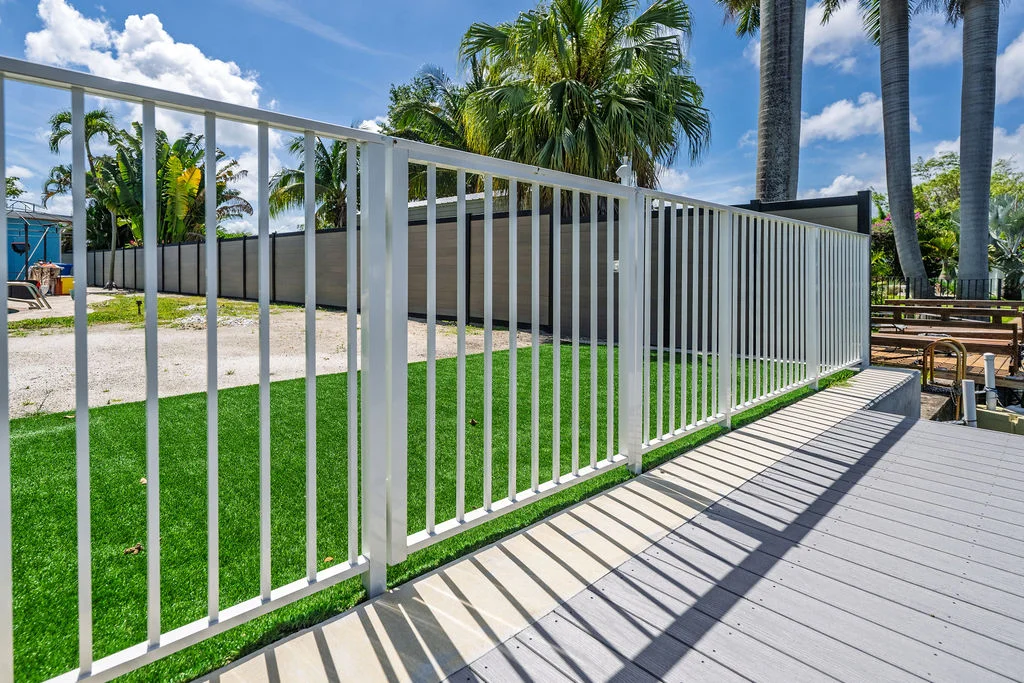
Aluminum Fencing

Explore
03

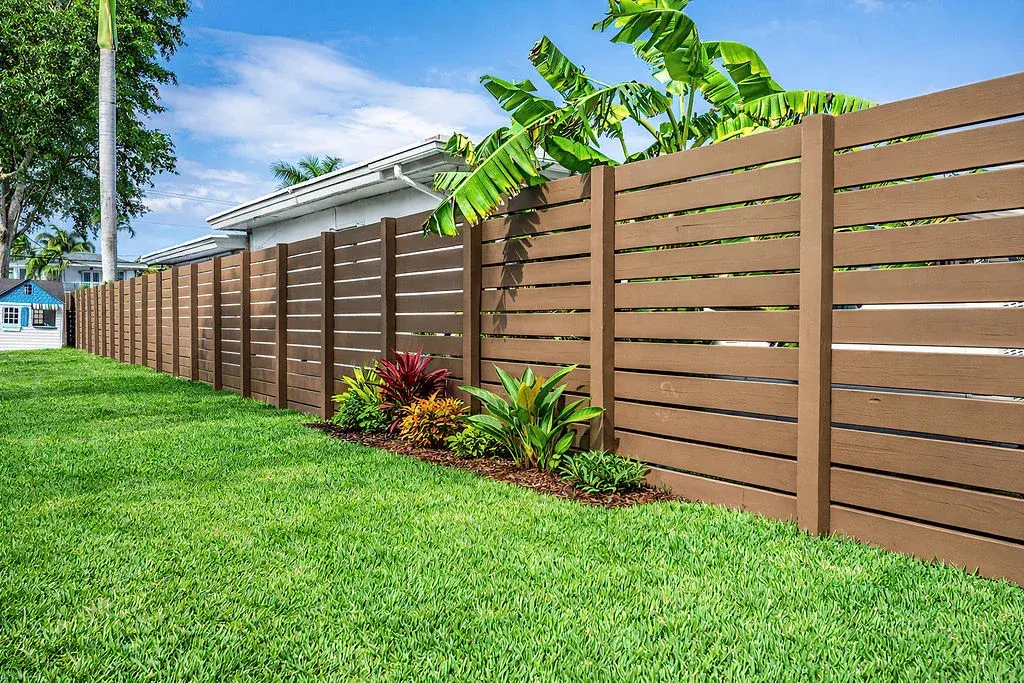
Wood Fencing

Explore
04

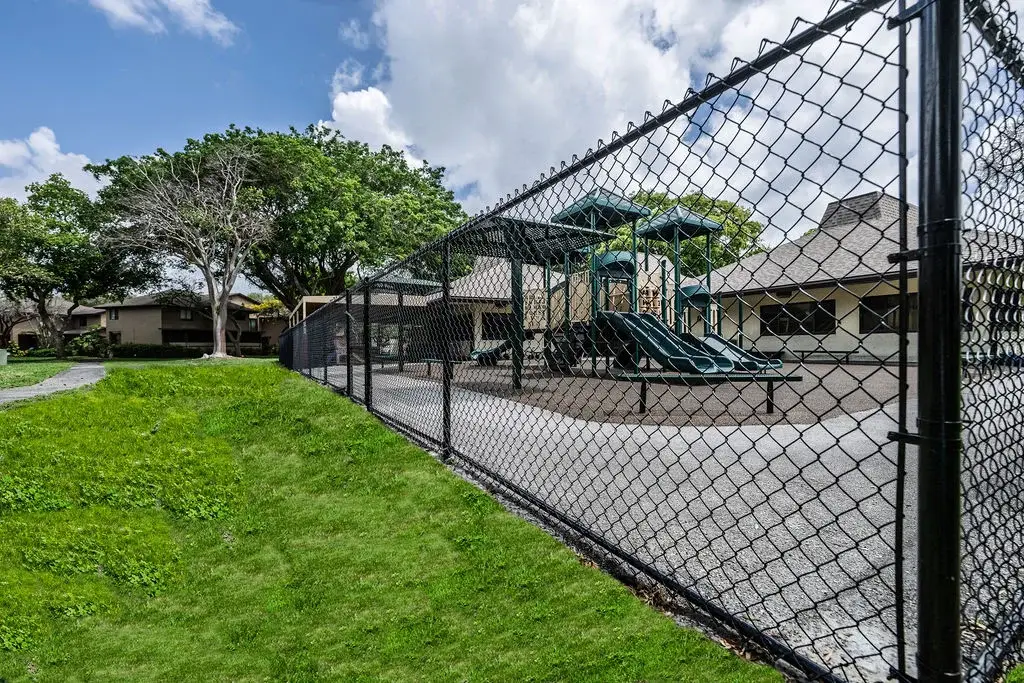
Chain Link Fencing

Explore
05

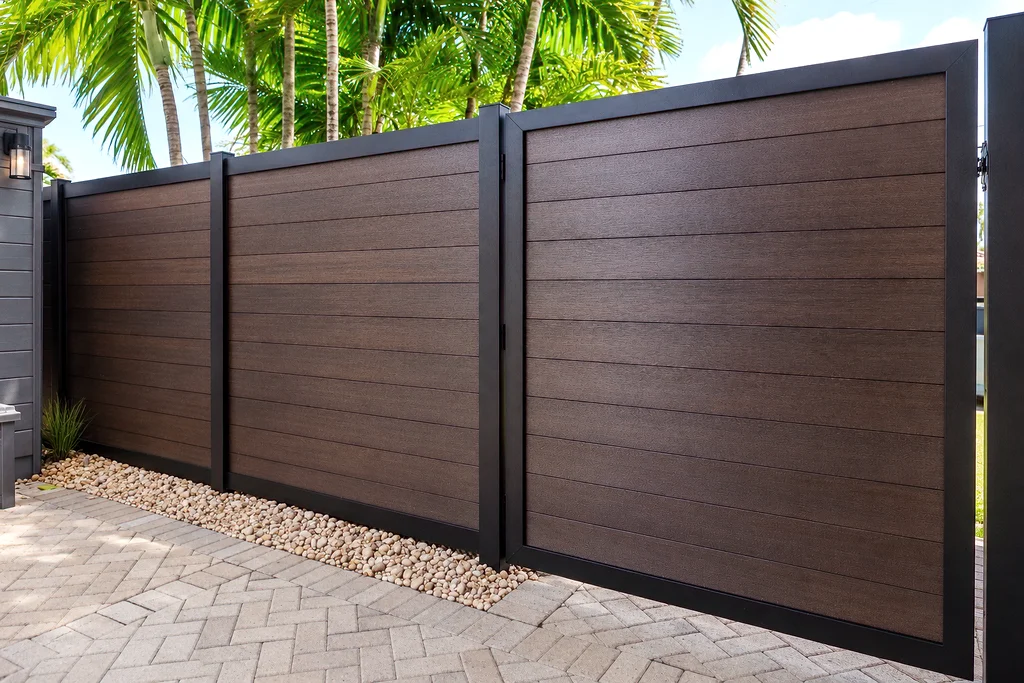
Composite Fencing

Explore
06

Gates & Automation

Explore
07

Commercial Fencing

Explore
More

Not sure which?

Get a free estimate

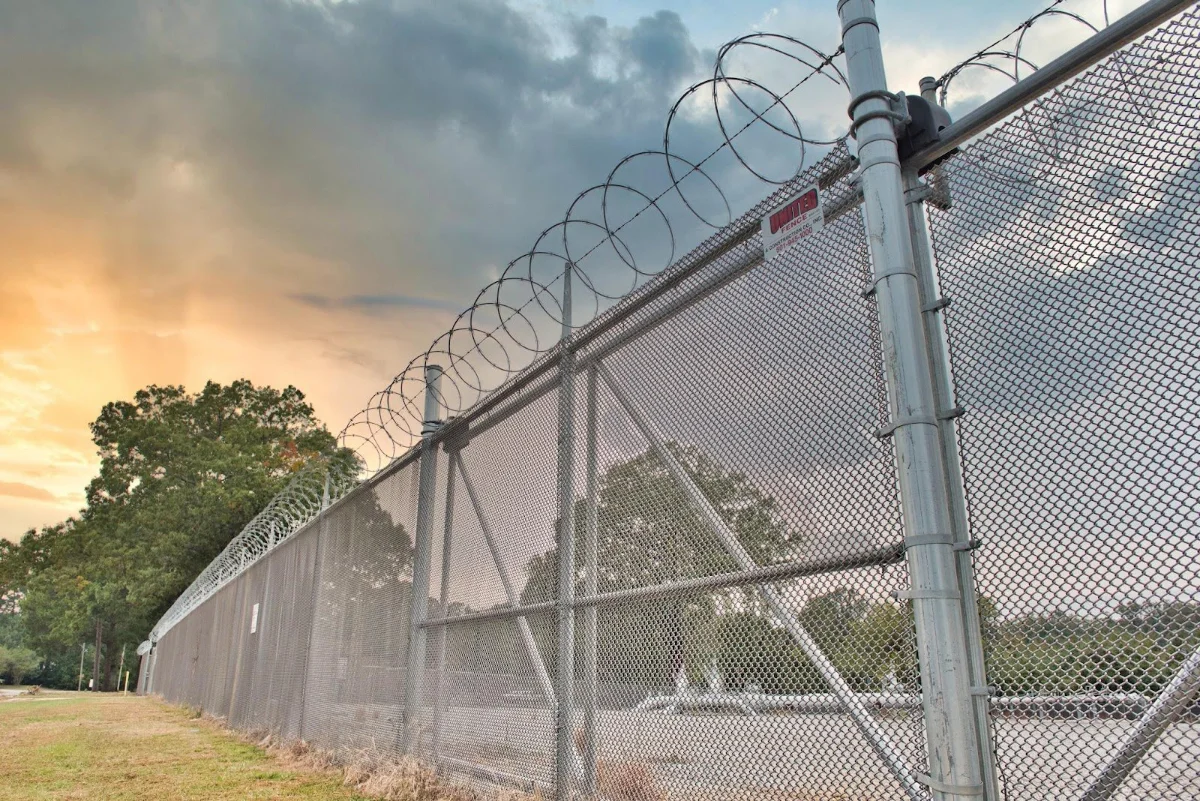
Chain link has practical and security uses, but location restrictions may apply — particularly in front yards and along street frontages. We confirm what is allowed on your property before recommending it.

Common fence permit delays

Where projects actually stall.

Almost none of the delays we see are caused by installation. They come from documentation and layout — things that are inexpensive to fix in planning and expensive to fix after a permit has been submitted or a post has been set.

Nikki, Permit Coordinator

Coordinator

Nikki handles every Hallandale Beach permit submission and association package end to end.

  1. 01

    Missing survey

    Why it happens — the survey is old, lost in a closing file, or never existed. How to avoid it — locate it before the estimate; we coordinate a new one when there isn't a usable copy.

  2. 02

    Easement conflicts

    Why it happens — the fence line is drawn along the property line without checking the plat. How to avoid it — read the recorded easements first and set the line accordingly.

  3. 03

    Visibility triangle conflicts

    Why it happens — a corner run carried all the way to the intersection. How to avoid it — stake the triangle from the survey and step the fence down or back.

  4. 04

    Incorrect fence heights

    Why it happens — one height applied to the whole property. How to avoid it — plan front, side and rear separately, measured from grade.

  5. 05

    Missing product documentation

    Why it happens — a coastal high-wind jurisdiction expects documentation for the system being installed. How to avoid it — submit the product paperwork with the application, not after a comment.

  6. 06

    Permit corrections

    Why it happens — an incomplete site plan sends the application back for revisions. How to avoid it — draw fence location, heights, gates and clearances to scale up front.

The typical fence project timeline

What actually happens, in order.

Most delays occur during planning and review rather than installation. Knowing where your project is — and what the next step depends on — makes the whole process easier to live with.

  1. 01 · Planning

    Site walk, property layout, goals and constraints. We identify what will shape the layout before anything is drawn.

  2. 02 · Survey Review

    Property lines, easements, rights-of-way, corner frontages and visibility areas read off the survey and plat.

  3. 03 · Permit Submission

    Site plan, heights, gate locations and product documentation packaged and submitted to the city.

  4. 04 · Municipal Review

    The city reviews placement, height, visibility and any easement or right-of-way condition.

  5. 05 · Corrections

    If comments come back, we respond and resubmit. This is where an accurate first submission pays for itself.

  6. 06 · Approval

    Permit issued, association letter on file, materials ordered and the install date scheduled.

  7. 07 · Installation

    Utility locates called in, layout staked, and our own crews install. Site is cleaned daily.

  8. 08 · Inspection

    We meet the inspector on site and walk the install — including the pool barrier where one applies.

  9. 09 · Completion

    Permit closed, paperwork sent, warranty on file and a real number to call if anything comes up.

Nikki, Permit Coordinator

Meet your project liaison

Nikki

Permit & Association Coordinator

Nikki runs the planning and paperwork side of every Hallandale Beach project — reading surveys and plats, preparing site plans, assembling product documentation for a coastal jurisdiction, submitting to the city, responding to review comments, coordinating association approvals and scheduling inspections. She's the reason most of our projects clear review without a second round. If you ever wonder where things stand, she's the person to call.

Why Hallandale Beach is different

A dense city on the coast.

Hallandale Beach is one of the most compact cities in Broward County — small lots, short blocks, close neighbors and a lot of corner frontage. That density means a fence here interacts with more than your own yard: it sits near a sidewalk, faces a side street, borders a shared line, or crosses a recorded easement that serves the whole block. Add a coastal exposure that puts wind and salt on every panel, and the planning matters as much as the product. That is why we read the property first — the survey, the plat, the frontages and the conditions that will shape the review — and only then talk about what the fence should be.

  • Small, densely platted lots
  • Frequent corner frontages
  • Recorded easements
  • Rights-of-way close to the house
  • Coastal wind exposure
  • Salt air and material choice

Different parts of the city, different plans

Hallandale Beach is not one market.

Six areas we work in most often. Each carries its own conditions — waterfront lines, association review, corner frontages, recorded easements, pool enclosures — that shape the plan well before we talk materials.

Waterfront

Golden Isles

  • Canal-front lines
  • Pool enclosures
Association

Three Islands

  • Community standards
  • Aluminum & PVC
Golf community

Diplomat Golf Estates

  • Architectural review
  • Custom gates
Coastal

Beach District

  • Salt-air exposure
  • Wind load planning
Established

Layne Boulevard

  • Corner frontages
  • Fence replacements
Compact lots

Northwest Hallandale

  • Recorded easements
  • Rear-yard privacy

Good to know

Hallandale Beach fence questions.

Straight answers to what Hallandale Beach homeowners ask us before a project starts. Still wondering something? Just call — we're happy to talk it through.

Do I need a permit for a fence in Hallandale Beach?

Yes. Fence installations are permitted and inspected. The application typically includes a survey, a site plan showing the fence location and heights, and documentation for the fence system being installed.

How tall can my fence be?

Height depends on where the fence sits. Front-yard fencing is limited to four feet, while side and rear yards allow up to six and a half feet. Certain conditions may be reviewed differently.

Can I install a fence on a corner lot?

Yes, but a corner lot carries a second street frontage and a visibility triangle at the intersection. The layout is planned around both before it goes in for review.

What is a visibility triangle?

An open wedge of sight at an intersection, measured 25 feet back along each intersecting street line. It keeps drivers, cyclists and pedestrians visible to one another, so fences, walls and hedges must not block it.

Can I install a fence inside an easement?

Sometimes, with additional review. The party holding the easement keeps its right of access, which means a fence inside one may need documentation — and may have to be removed if the easement is ever accessed.

Why does the finished side face outward?

Because the fence is part of the streetscape and your neighbor's view. The finished side generally faces the neighboring property and the public right-of-way, with posts and rails turned toward your own yard.

What if both sides of my fence are visible from the street?

On a corner or through lot where both faces are visible from a right-of-way, both sides may need to be finished. That is a fabrication decision made in planning, not a field adjustment.

Can I install chain-link fencing in my front yard?

Location restrictions may apply. Chain link has practical and security uses, but front yards and street frontages are treated differently. We confirm what is allowed on your specific property before recommending it.

How long do permits take?

It depends on the city's review queue, whether an association approval is involved, whether an easement condition triggers additional review, and whether corrections are needed. We give you a realistic window up front rather than a date we can't hold.

What documents are typically required?

A current survey, a scaled site plan showing fence location, heights and gates, product documentation for the system being installed, and association approval where a community requires it.

Do I need a survey?

In nearly every case, yes. Without one there is no reliable way to confirm property lines, easements or setbacks — and it is the document review is built on. If you don't have a usable copy, we coordinate one.

Does living near the coast change the fence itself?

It does. Broward County is a High Velocity Hurricane Zone, so wind load, footing design, hardware and finish selection all matter more here than inland. Not every fence product on the market is built for it.

Have a question we didn't cover?

Ready when you are

Plan your Hallandale Beach
fence project with confidence.

Whether you're replacing an existing fence, planning a new installation, or navigating local requirements, understanding the process can help avoid unnecessary delays and surprises.

Financing available

Fence now. Pay over time.

Power Fence can help customers explore monthly payment options through Wisetack for eligible fence, gate, and railing projects.

UP TO 25K ELIGIBLE PROJECTS Fast customer prequal No prepayment penalty

Ask about financing

Financing subject to credit approval. Payment options are provided by Wisetack lending partners.