Call Us: 954-371-1370 Email: info@powerfenceinc.com 902 SW 2nd Place, Pompano Beach, FL 33069
Licensed & Insured - Broward Lic. 20-F-21831-X
Palm Beach Lic. U-22529

Southwest Ranches · Broward County

Southwest Ranches
Fence Company

Planning a fence in Southwest Ranches often involves more than enclosing a backyard. Learn about acreage properties, estate entrances, property boundaries, privacy planning, and fence regulations unique to Southwest Ranches.

500+Five-star reviews
20+ yrsServing South Florida
Licensed & InsuredBroward + Palm Beach

Before you install

What homeowners should know before fencing acreage in Southwest Ranches.

On a quarter-acre lot, a fence encloses a backyard. On an acre and a half, a fence organizes an entire property — where you enter, where equipment turns around, where the horses are, where the neighbor's line actually falls. Before materials, we map how the property works.

Fig. 01 — Acreage property site plan
01

Gate placement

The entry gate sets the arrival sequence — how far it sits off the road, how a vehicle stages while it opens, and whether a delivery truck can turn around inside.

02

Long fence runs

Rear and side runs on acreage are measured in hundreds of feet. Material, post spacing and grade changes all behave differently at that length.

03

Property separation

Interior cross fencing divides the property by use — residence, pasture, agricultural area — without enclosing the whole parcel twice.

04

Access planning

A second service gate keeps tractors, trailers, landscape crews and equipment out of the main entrance and off the finished driveway.

05

Privacy planning

Privacy is rarely needed on all four sides. It's usually one or two runs — the neighbor line, the road frontage — screened where it actually matters.

Fence planning on large properties often begins with understanding how the entire property functions.
01

Understanding property boundaries

A small error on a 60-foot backyard run is a nuisance. The same error carried across 1,400 feet of perimeter is a survey dispute, a relocated fence and a rebuilt gate. On acreage, boundary verification isn't paperwork — it's the first construction step.

Property line accuracy becomes increasingly important as fence lengths increase.
  • Survey — current survey reviewed before any layout
  • Property corners — located and marked on site
  • Boundary markers — iron pins or monuments, not hedges or old wire
  • Fence line — held entirely inside your boundary
  • Neighboring property — line documented, never assumed
Fig. 02 — Survey & boundary verification
02

The advantage of an eight-foot fence

Most South Florida communities cap residential fences at six feet. Southwest Ranches allows up to eight. Two feet doesn't sound like much on paper — in practice it's the difference between a fence you see over and a fence you don't.

Southwest Ranches allows greater flexibility for privacy and perimeter fencing than many neighboring communities.
  • Privacy — sight lines from adjacent property are cut off, not just filtered
  • Noise reduction — more mass and height between the yard and the road
  • Visual screening — equipment, trailers and work areas stay out of view
  • Security — a meaningfully harder perimeter at the same cost per foot of labor
Fig. 03 — Six feet vs. eight feet
03

Estate gates and long driveways

On an acreage property the gate is the part of the fence people actually use every day — several times a day, in a vehicle, often in the rain, sometimes with a trailer behind them. It deserves more thought than the rest of the perimeter combined.

For many Southwest Ranches properties, gate planning is just as important as fence planning.
  • Staging — room to pull fully off the road while the gate opens
  • Clear opening — sized to trailers and equipment, not to a sedan
  • Visitor entry — keypad or intercom at the main gate
  • Service access — a second working gate away from the main drive
Fig. 04 — Entry sequence & access
04

Long fence run planning

A 150-foot backyard fence and a 1,800-foot perimeter are not the same project at a larger size. Length changes the material math, the way the fence moves with temperature, where gates have to go, and what maintenance looks like in year eight.

Large projects often require different planning considerations than traditional backyard fences.
  • Material selection — cost per foot compounds fast; most large properties mix
  • Expansion & contraction — vinyl and aluminum move; over hundreds of feet it must be detailed
  • Gate locations — placed by how the property is worked, not spaced evenly
  • Future additions — a barn, paddock or pool later is cheaper if the line anticipated it
  • Maintenance — every foot is a foot to clean, repair and eventually replace
Fig. 05 — Short run vs. long perimeter
01

Material selection

A premium material where the fence is seen, a durable working material where it isn't — most acreage perimeters are a mix.

02

Expansion & contraction

Vinyl and aluminum both move with temperature. Over hundreds of feet, that movement gets detailed into the design.

03

Gate locations

Set by mowing, deliveries and trailers — the routes the property is actually worked along.

04

Future additions

Barn, paddock, guest structure or pool. Far cheaper if the fence line left a way in.

05

Maintenance

Material choice is a maintenance decision as much as an appearance one at this scale.

The short version

Southwest Ranches fence rules, at a glance.

The requirements we plan around on every Southwest Ranches project. Every property is different — these are the typical starting points.

8′Maximum
fence height
1–2Acres on a
typical parcel
2–4Gates on a
typical property
811Utility locates
before digging
Finished Side Faces OutwardThe finished side of the fence faces the neighboring property or right-of-way; posts and rails face in
Permit RequiredA permit is required before installation — the submittal identifies location, type, height, gates and total footage
Entirely On Your PropertyThe fence must remain wholly within your boundary, which is why a current survey and located corners come first
Survey FirstCorners, boundaries and easements verified before layout is staked — the step that prevents relocations later

Equestrian, agricultural & estate

How the property is used changes everything.

Two neighbors on identical acreage can need entirely different fences. One keeps horses and needs safe, visible containment. One wants a screened perimeter and a private entrance. The property is the same; the plan isn't.

Equestrian

Horse properties

  • Safe, visible containment
  • Paddock and pasture separation
  • Wide gates for equipment
Agricultural

Agricultural properties

  • Long perimeter runs
  • Durable, working materials
  • Vehicle and equipment access
Estate

Estate properties

  • Privacy and screening
  • Designed entrance and gate
  • Consistent perimeter appearance
Residential

Large residential

  • Enclosed yard within a larger parcel
  • Pool and pet containment
  • Access control at the drive
Common to all

Perimeter fencing

The outer line — the one that defines the property and carries the most linear footage, cost and permitting weight.

Common to all

Access control

Who comes in, where, and how. Usually one primary entrance plus at least one working access point.

Common to all

Property separation

Interior fencing that divides use areas — pasture from yard, agricultural from residential — inside the perimeter.

Fence goals vary significantly depending on how the property is used.

Different parts of town, different plans

Southwest Ranches is not one market.

Six areas we work in most often. Parcel size, road frontage, equestrian trails, canal and easement lines all differ across town — and each one shapes the fence plan well before we talk materials.

Acreage

Sunshine Ranches

  • Long perimeter runs
  • Equestrian trail frontage
Residential

Green Meadows

  • Mature landscaping
  • Privacy along the neighbor line
Estate

Rolling Oaks

  • Designed entrances
  • Automatic gate planning
Equestrian

Country Estates

  • Paddock and pasture separation
  • Wide equipment gates
Larger parcels

Landmark Ranch Estates

  • Full perimeter projects
  • Phased installations
Working land

Sunset Ranches

  • Agricultural use areas
  • Durable working materials

Fence solutions for Southwest Ranches

Popular fence types on acreage.

There's no single right material for a large property — and on most of them, no single material at all. The perimeter, the entrance, the pasture and the pool area each answer a different question. We talk through every option and recommend what fits.

01

Vinyl Fencing

Explore
02

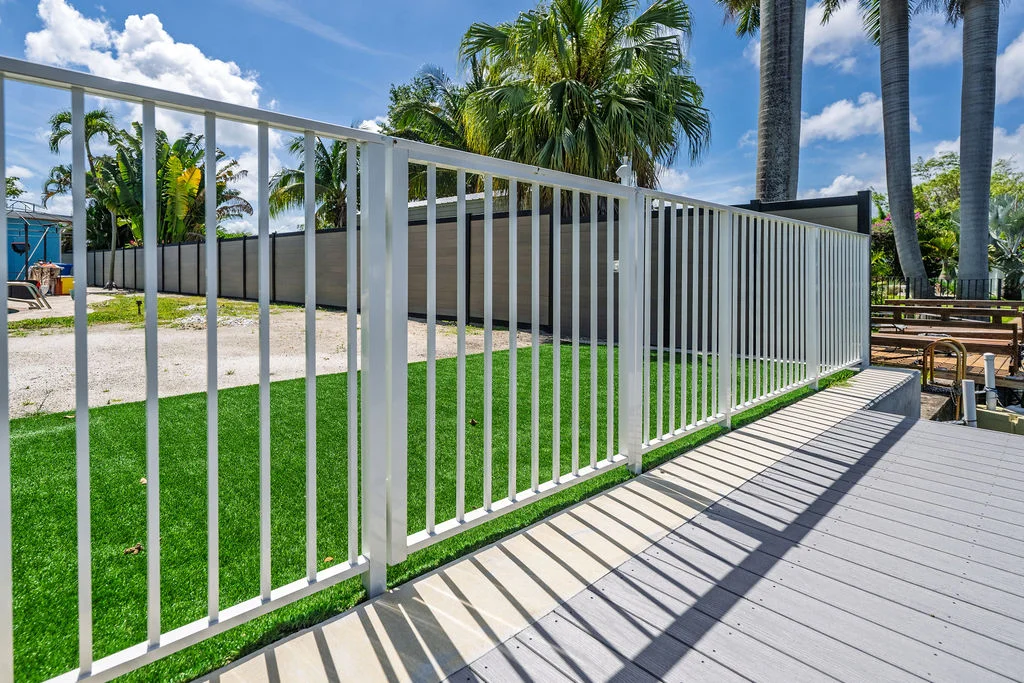
Aluminum Fencing

Explore
03

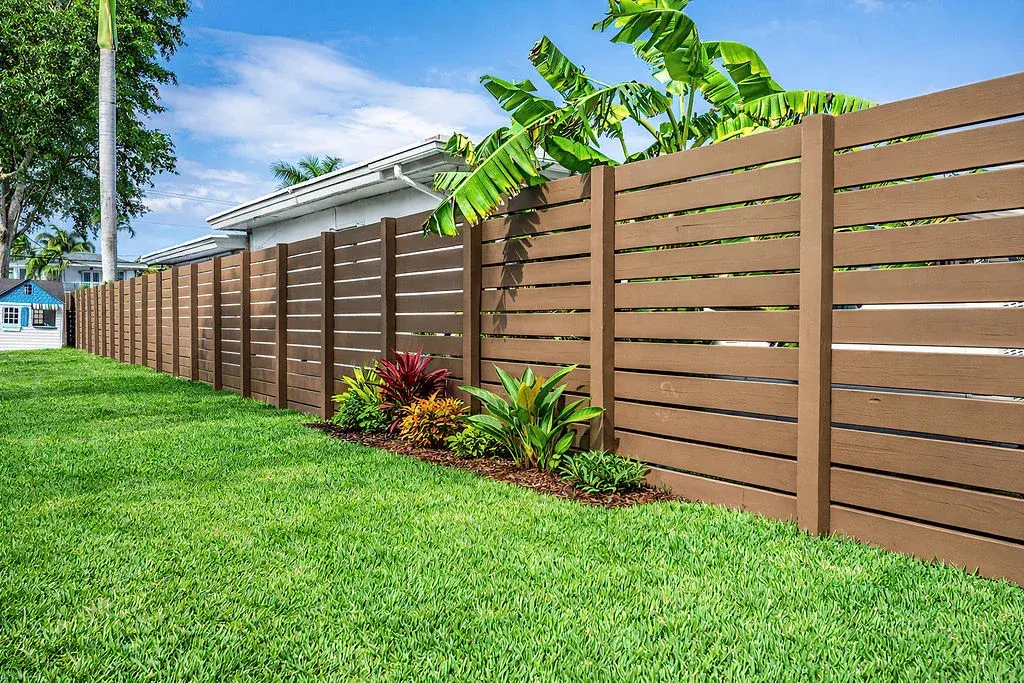
Wood Fencing

Explore
04

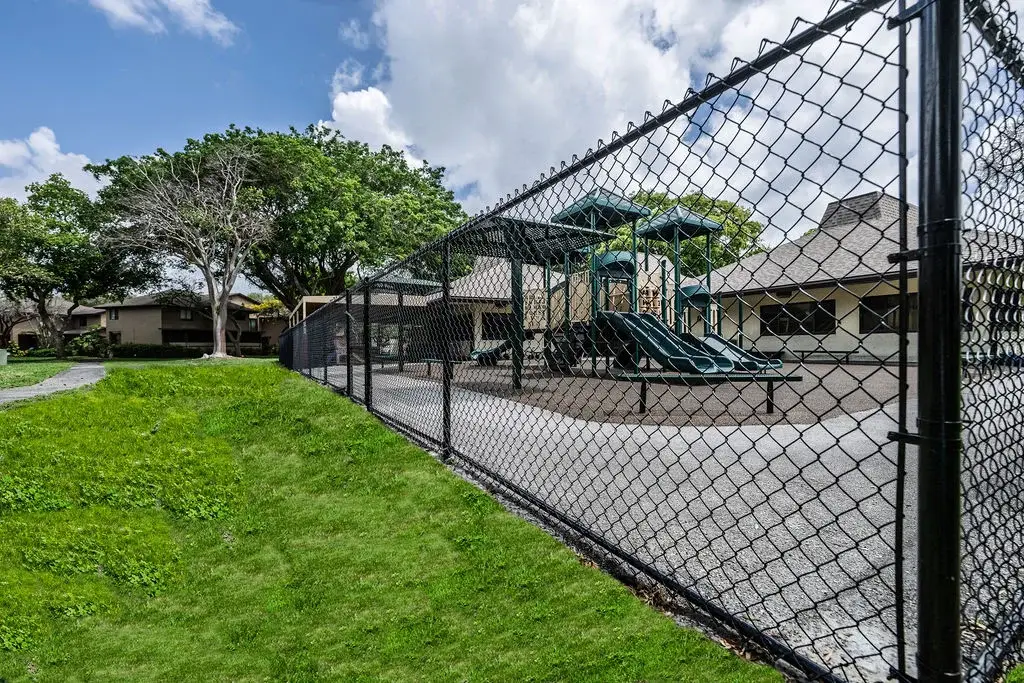
Chain Link Fencing

Explore
05

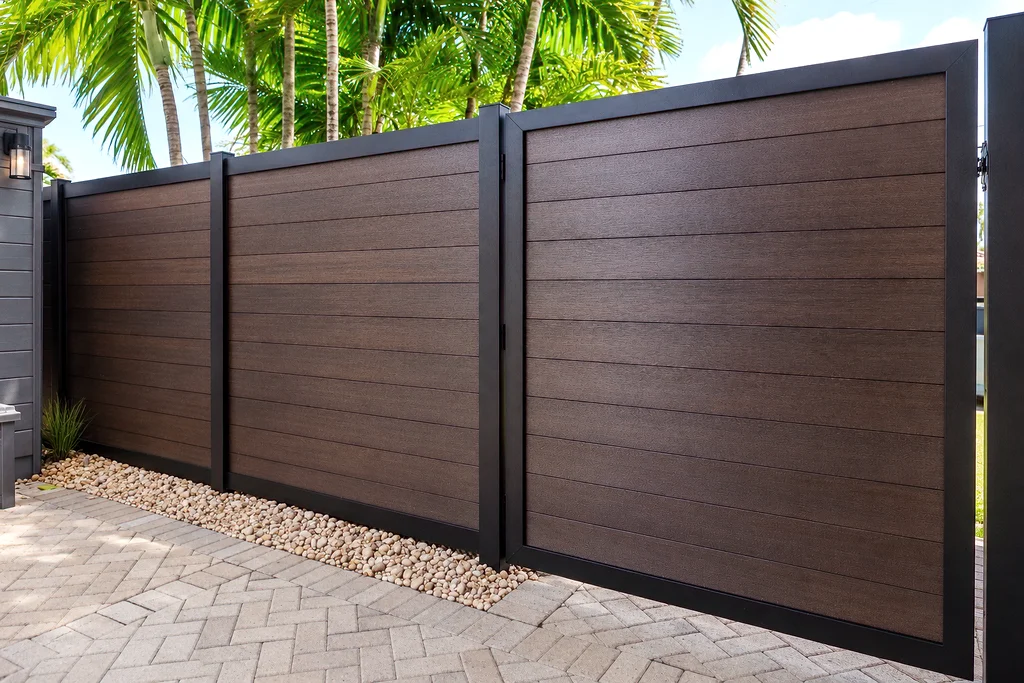
Composite Fencing

Explore
06

Gates & Automation

Explore
07

Commercial Fencing

Explore
More

Not sure which?

Get a free estimate

Planning & permitting

Six mistakes worth avoiding.

None of these are unusual on acreage. All of them are avoidable, and all of them are far cheaper to catch during planning than during construction.

Nikki, Permit Coordinator

Coordinator

Nikki assembles and files every Southwest Ranches permit package, then tracks it through review.

  1. 01

    Boundary assumptions

    A hedge, tree row or old wire fence has marked the "line" for decades and everyone builds off it. Set the layout from a current survey and located corners instead.

  2. 02

    Missing surveys

    The survey is decades old, was never updated after an addition, or can't be found. We confirm at the estimate and coordinate a new one before submittal.

  3. 03

    Poor gate placement

    The gate lands where the fence line is convenient rather than where a vehicle can stage and turn. Walk the approach with the trailer that will really use it.

  4. 04

    Future access restrictions

    The perimeter closes cleanly, then a barn or pool arrives and equipment can't get in. Plan one working access point wider than you think you need.

  5. 05

    Utility conflicts

    Wells, septic fields and irrigation mains on acreage rarely appear on the plan you're holding. Sunshine 811 locates on every job, plus a walk of private utilities.

  6. 06

    Permit delays

    An incomplete submittal — missing survey, unclear footage, no gate locations — resets the review clock. Filing it complete the first time is the whole game.

After you sign

What happens next.

Eight steps, in order. On acreage properties the first three take longer than most homeowners expect — and they're the reason the last three go smoothly.

  1. 01 · Planning

    We walk the property, discuss how it's used, and map the perimeter, gates, access points and privacy priorities.

  2. 02 · Survey Review

    Corners, boundaries and easements are verified against the proposed line, gate locations and total length.

  3. 03 · Permit Submission

    Nikki assembles the package — site plan, fence type, heights, gates and linear footage — and files it.

  4. 04 · Approval

    We track the review, answer comments and handle revisions so the permit issues without a second round.

  5. 05 · Material Ordering

    Materials for long runs are ordered as a full take-off, so color, profile and lot match end to end.

  6. 06 · Installation

    Our own crews stake the line off the survey and install. Site cleaned daily — no subs, no surprises.

  7. 07 · Inspection

    We meet the inspector on site, walk the installation and close the permit out properly.

  8. 08 · Completion

    Final walkthrough, gate operation and hardware demonstrated, warranty paperwork handed over.

Nikki, Permit Coordinator

Meet your project liaison

Nikki

Permit & Project Coordinator

Nikki runs the back-of-house side of every Southwest Ranches project — preparing site plans, submitting permits, coordinating surveys, tracking review comments and scheduling inspections. On large properties the paperwork is a real part of the job, and it's the part homeowners least want to chase. If you ever wonder where your project stands, she's the person to call.

The bigger picture

Planning for the long term.

Southwest Ranches properties change over time — a barn goes up, a paddock is added, a pool arrives, part of the land changes use entirely. A perimeter fence installed today has to survive all of that without being cut apart and rebuilt. So we plan for the version of the property you'll have in ten years: where a future access point would go, which runs will still be visible from the road, how the material will look after a decade of Florida sun, and which sections you'll want to extend rather than replace.

  • Acreage and estate-sized parcels
  • Equestrian and agricultural use areas
  • Phased perimeters planned as one design
  • Access preserved for future structures
  • Long-term maintenance expectations
  • Boundaries documented before, not after

Southwest Ranches project spotlights

Recent jobs.

Recent Southwest Ranches jobs focused on acreage access, wood fencing and long-term property planning.

Wood Gate + Fence
01 - Wood Gate + Fence project

Wood Gate and Fence

Project

Wood gate and fence work planned around acreage access, privacy and a stronger property edge.

Case Study ->
Wood Installation
02 - Wood installation process

Wood Installation Steps

Project

A behind-the-build look at layout, post setting, concrete, rails, pickets and gates on a Southwest Ranches wood fence project.

Case Study ->

Good to know

Southwest Ranches fence questions.

Straight answers to what acreage owners ask us before a project starts. Still wondering something? Just call — we're happy to talk it through.

How tall can a fence be in Southwest Ranches?

Up to eight feet for residential fencing — higher than most neighboring South Florida communities, where six feet is the ceiling. Site conditions and zoning can affect what's appropriate in a specific location, so we confirm height during the estimate.

Do I need a permit?

Yes. A permit is required before installation. The submittal identifies fence location, fence type, height, gate locations and total linear footage, and it's reviewed against your survey. We prepare and file the package for you.

Can I install a fence directly on my property line?

The fence must remain entirely on your property. In practice that means setting the line just inside the boundary rather than centered on it — which is why located corners matter more on acreage than on a small lot.

What is the finished side requirement?

The finished side of the fence faces outward, toward the neighboring property or the right-of-way. Posts and rails face into your property, and it applies to the whole run, including along a road frontage.

What fence styles are popular on acreage properties?

Most large properties end up with a combination: PVC or composite where privacy matters, aluminum at the entrance and around a pool, and wood or chain link on the working and agricultural portions of the perimeter.

How do I determine my property boundaries?

With a current survey and located corner markers — iron pins or monuments set at each corner. Hedges, tree rows and old wire fences are not boundaries, and on long runs the difference between them and the real line adds up quickly.

What type of fence works best for large properties?

It depends on what the fence is doing. Containment, screening, security and appearance point to different materials — and on 1,500 feet of perimeter, cost per foot and long-term maintenance carry far more weight than they would on a backyard.

Can I install an automatic gate?

Yes, and on long driveways it's common. Planning covers the operator type, power and backup power, safety sensors, keypad or intercom entry, and whether a swing or slide gate suits the approach and grade at your entrance.

How long does the permitting process take?

It varies with the review queue and whether the submittal is complete. A package filed complete the first time — current survey, clear site plan, gates and footage identified — moves considerably faster than one that comes back for revisions.

Do I need a survey before you can quote the job?

Not to quote it. We need one before layout and submittal. If your survey is old, missing, or predates an addition, we'll tell you at the estimate and coordinate an updated one.

Can I fence part of the property now and the rest later?

Yes — phasing is common on acreage. The important part is planning the full perimeter up front so the phases meet cleanly, materials still match, and access to the unfenced portion isn't cut off in the meantime.

What about horses and livestock?

Equestrian and agricultural areas are usually fenced differently from the residential portion — visibility and safe containment matter more than privacy, and gates are sized for equipment rather than for people.

Have a question we didn't cover?

Ready when you are

Plan your Southwest Ranches
fence project with confidence.

Whether you're enclosing acreage, planning an estate entrance, installing perimeter fencing, or upgrading an existing property, understanding the planning process can help avoid costly mistakes and delays.

Financing available

Fence now. Pay over time.

Power Fence can help customers explore monthly payment options through Wisetack for eligible fence, gate, and railing projects.

UP TO 25K ELIGIBLE PROJECTS Fast customer prequal No prepayment penalty

Ask about financing

Financing subject to credit approval. Payment options are provided by Wisetack lending partners.