What This Project
Needed to Solve
The homeowner's brief wasn't really about a fence — it was about getting one off the to-do list. An aging wood fence had become a recurring chore: greying boards, gaps opening along the privacy line, and an upkeep schedule that never ended. The goal was to trade years of sealing, staining and board swaps for privacy, durability and a backyard that simply looked finished.
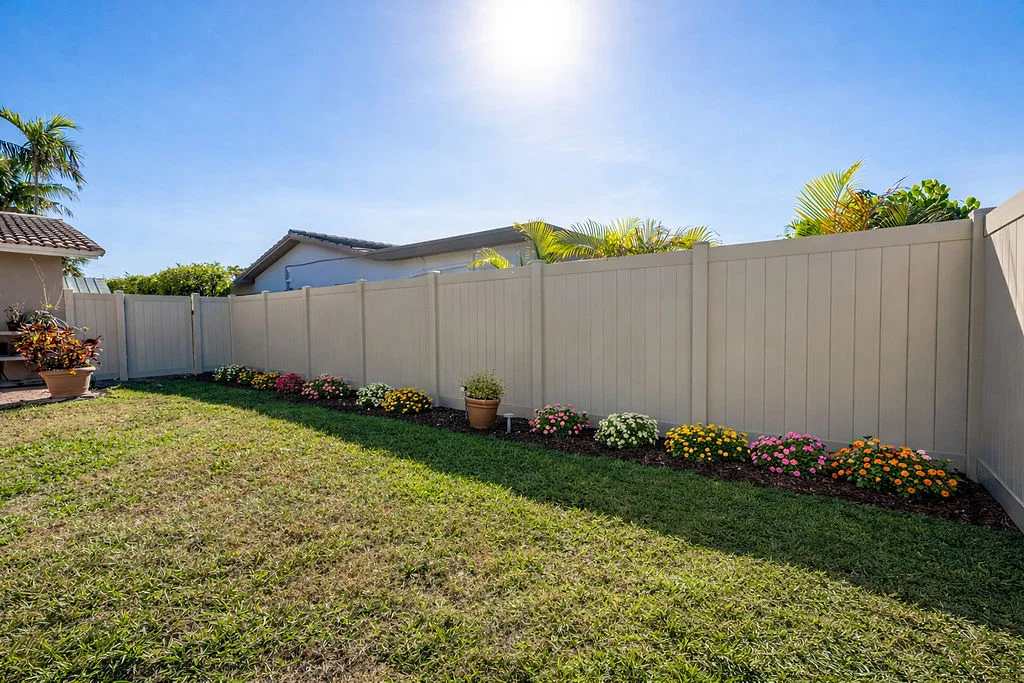
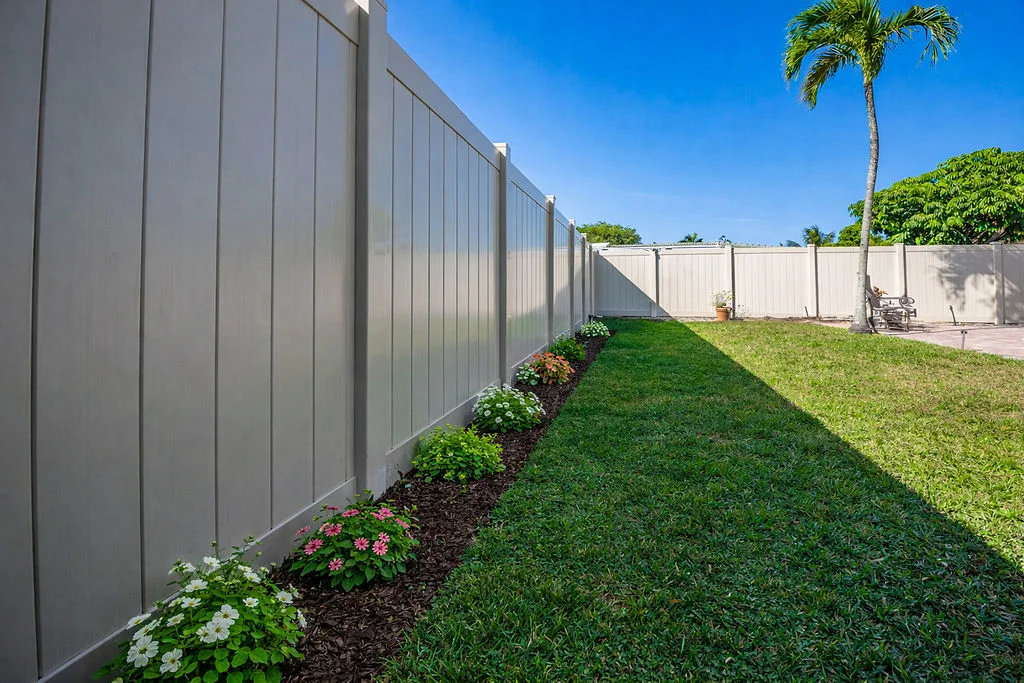
The aesthetic requirement was specific. Because the lot presents to the street on more than one side, the fence reads as part of the home's exterior — not a hidden back boundary. It had to look intentional from the curb while staying budget-conscious. White PVC was considered and ruled out: against a warm exterior it can read stark. Tan was the direction from the start.
Four Conditions That
Shaped the Design
The existing wood fence had reached the end of its service life. It was removed and hauled in full before the new line went in, with the perimeter re-established cleanly rather than patched.
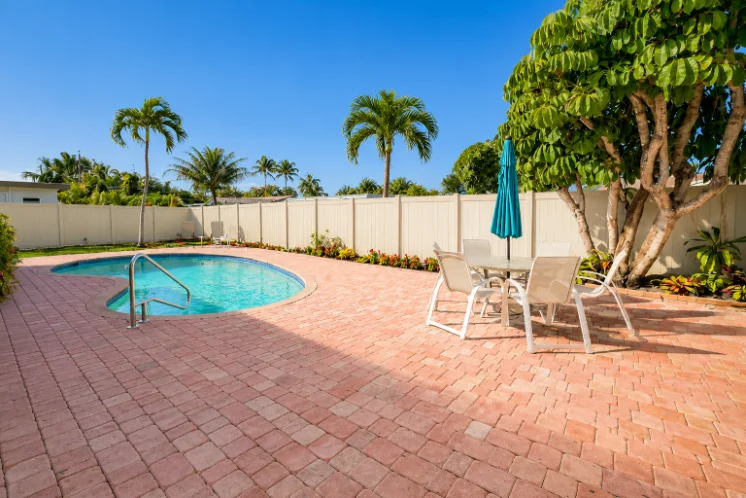
The lot opens to the street on more than one side, so the fence is always in view. That raised the bar on color and proportion — the material had to flatter the house, not just enclose the yard.
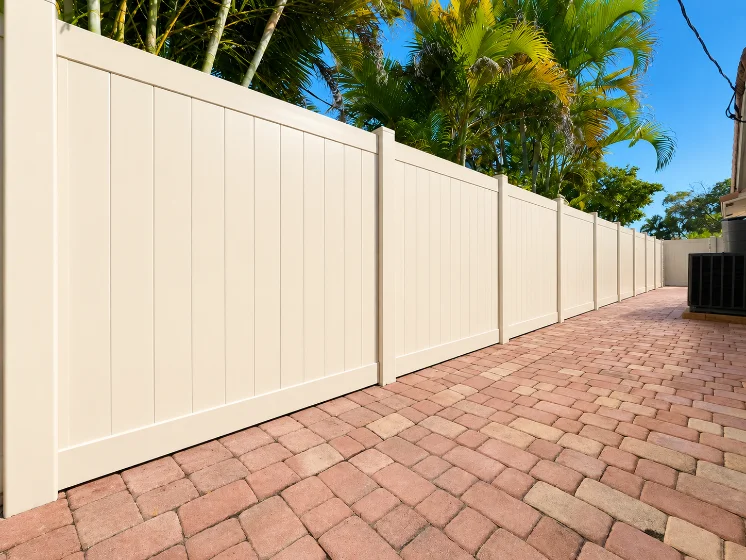
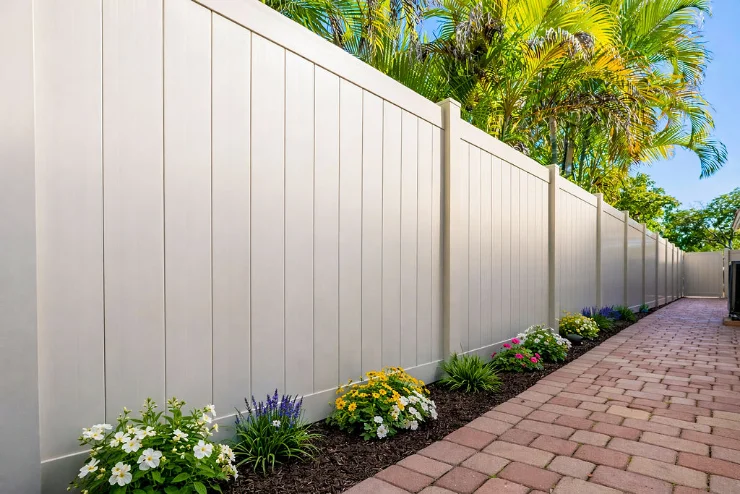
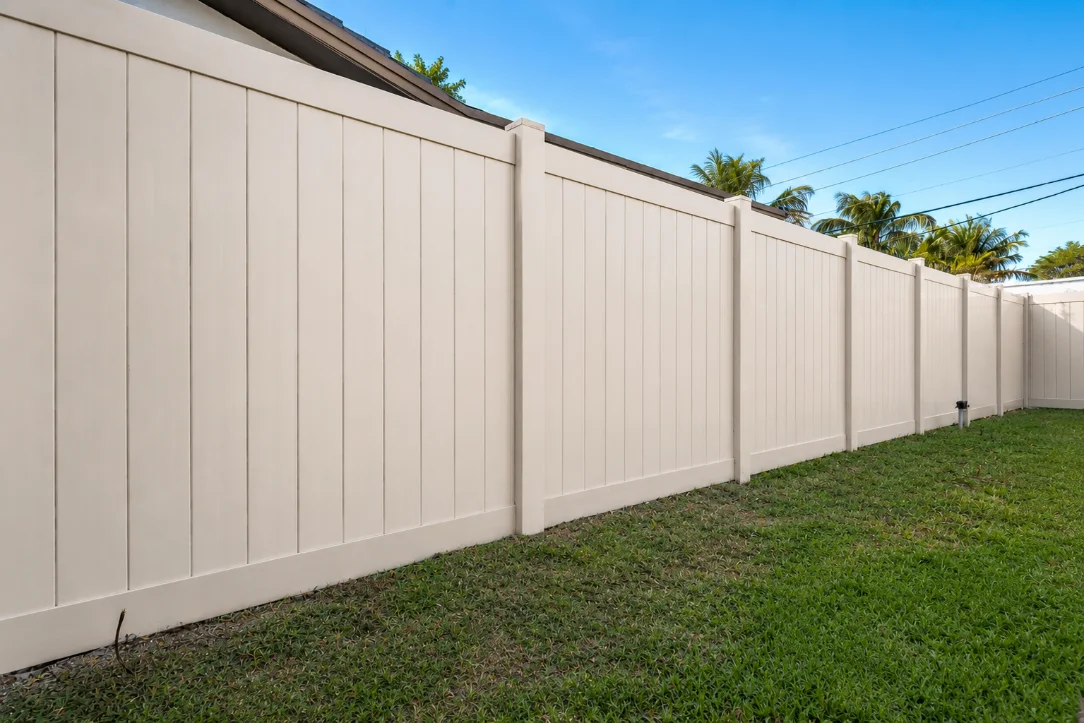
The yard isn't perfectly flat. Panels were stepped neatly with the grade so the top line stays orderly and the bottom follows the ground without leaving gaps under the fence.
The same climate that greys and warps wood drove the material choice. Cellular PVC won't rot, splinter, swell or feed insects, and its through-body color won't fade out the way a surface stain does.
Why Every Detail
Was Deliberate
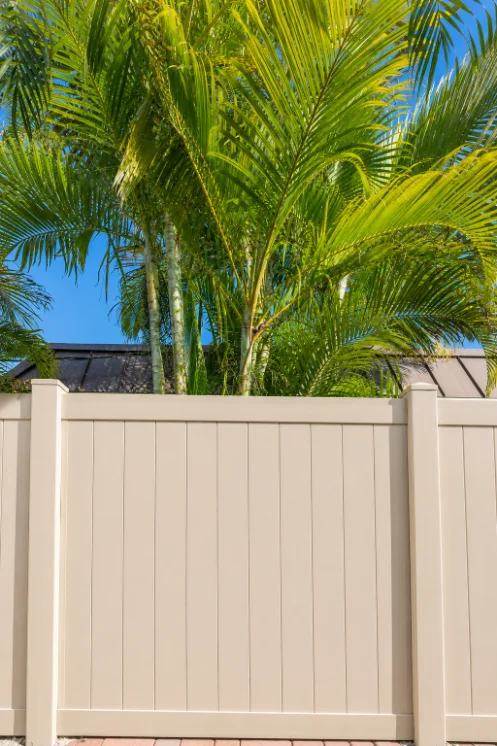
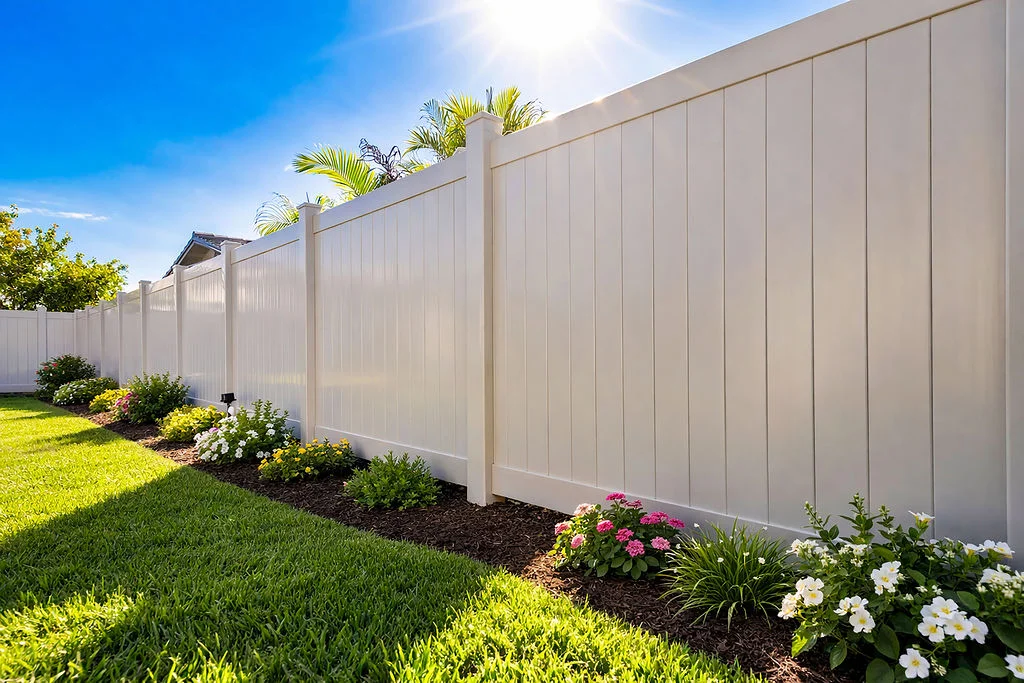
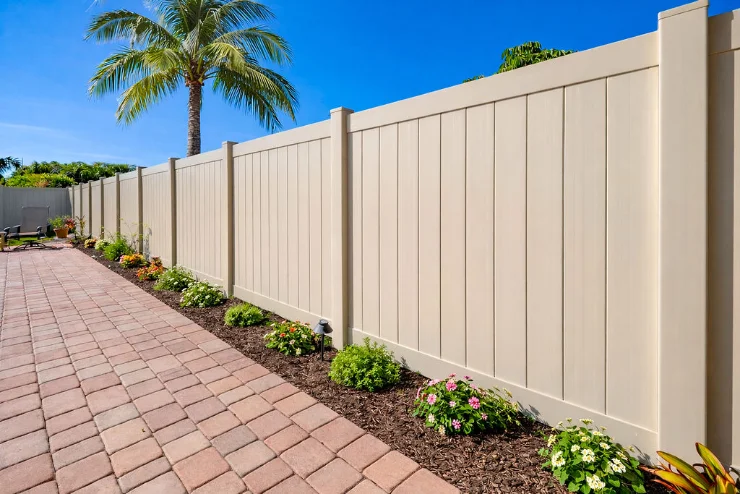
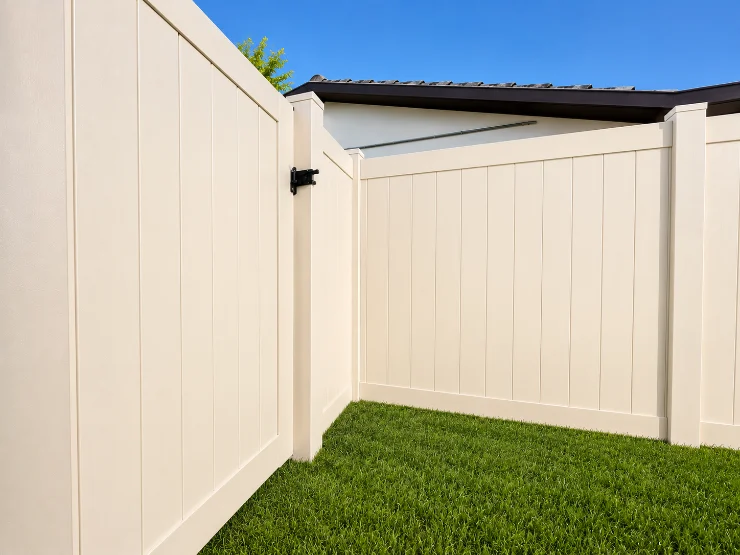
The central decision was tan over white. White PVC can look clinical against stucco, stone and paver tones, especially in bright Florida light. Tan sits quietly with a warm exterior — it complements the home instead of competing with it. From there, every other choice reinforced the same intentional, low-maintenance result.
Full Material
Specification
| Item | Specification |
|---|---|
| Fence run | 194 linear feet — full property perimeter |
| Fence height | 6 ft (72 inches) — solid privacy |
| Panel system | Tongue-and-groove cellular PVC, routed rails |
| Color & finish | Tan — through-body, nothing to paint or seal |
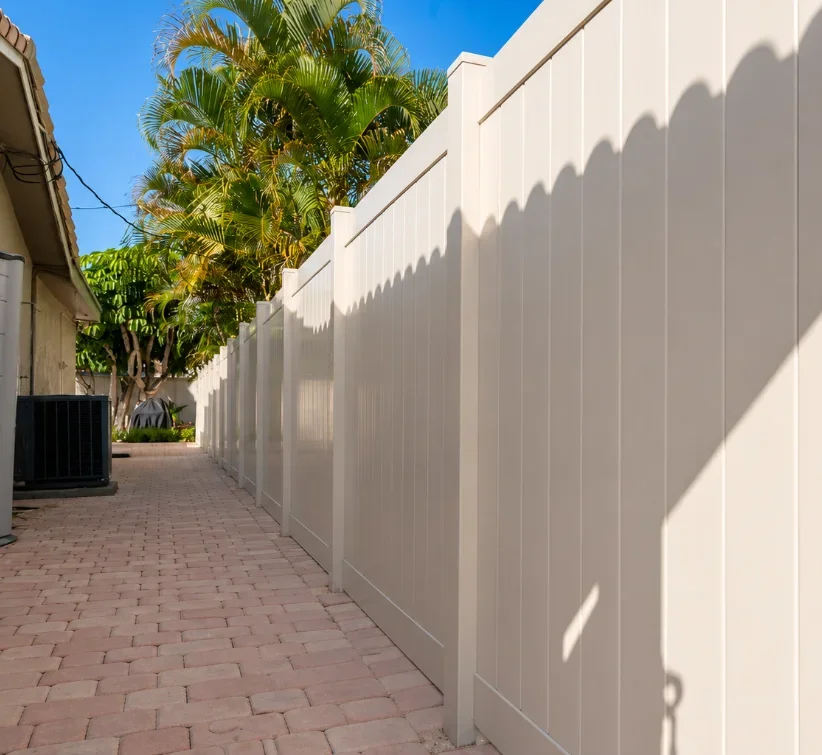
| Privacy | Full screen — no sight gaps along the line |
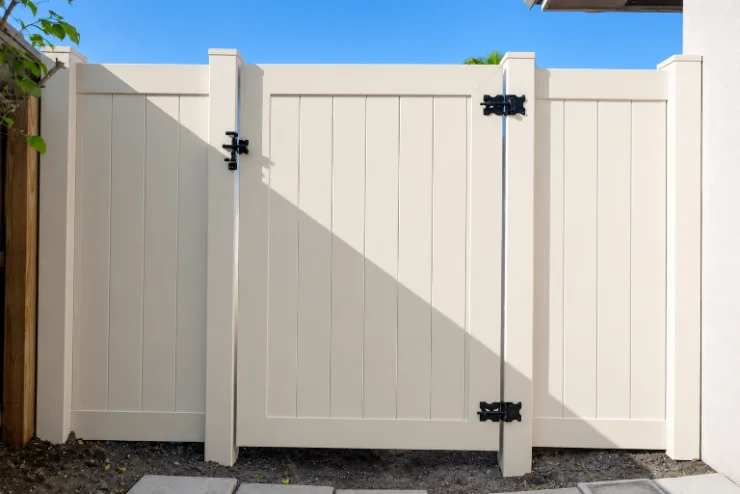
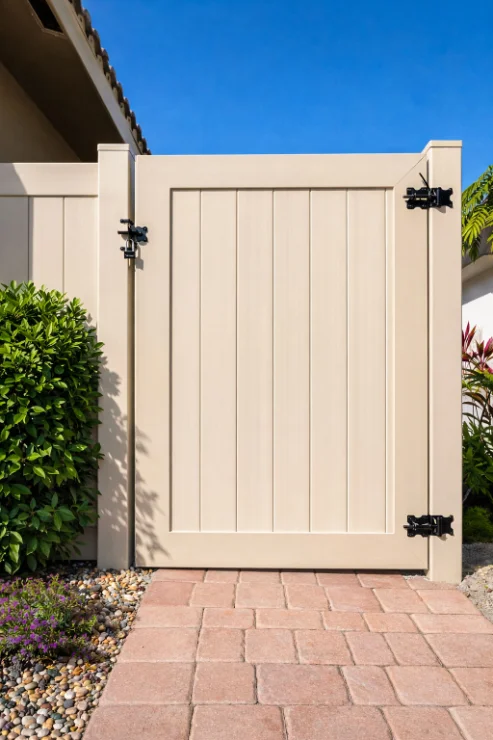
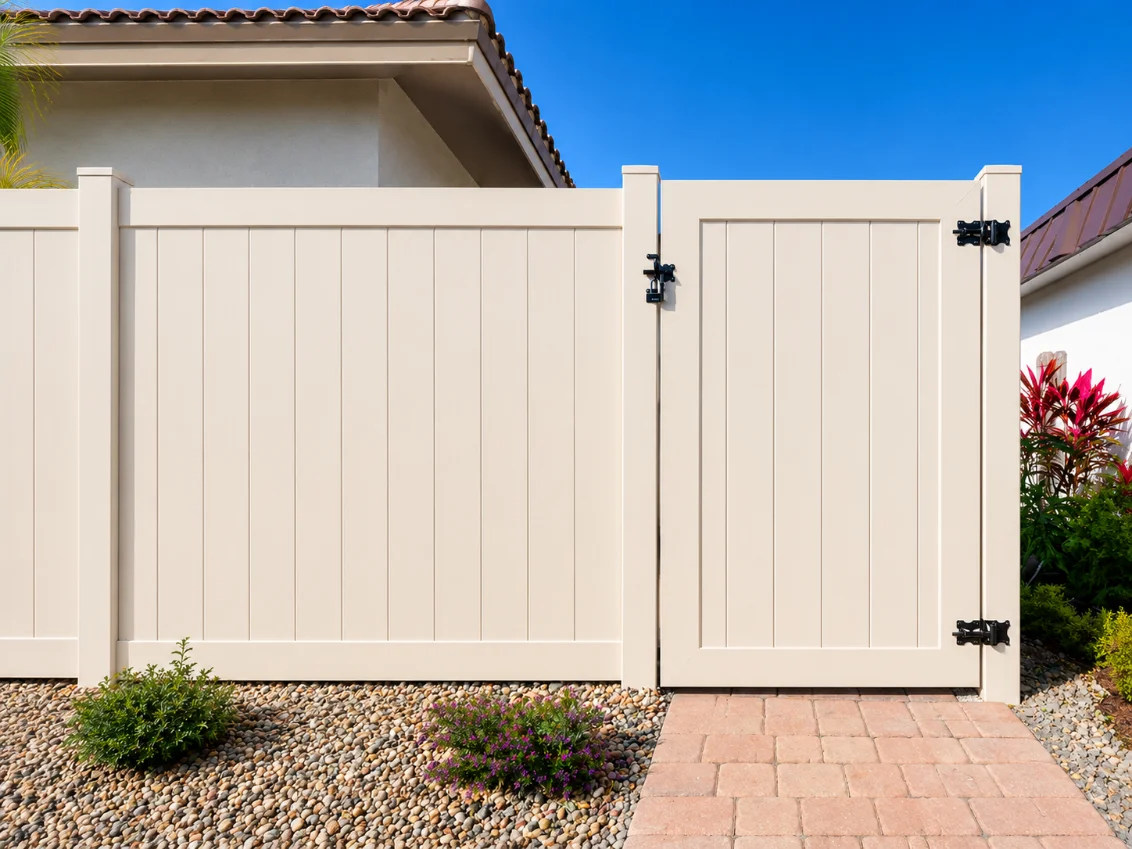
| Gates | Two — built from matching panel |
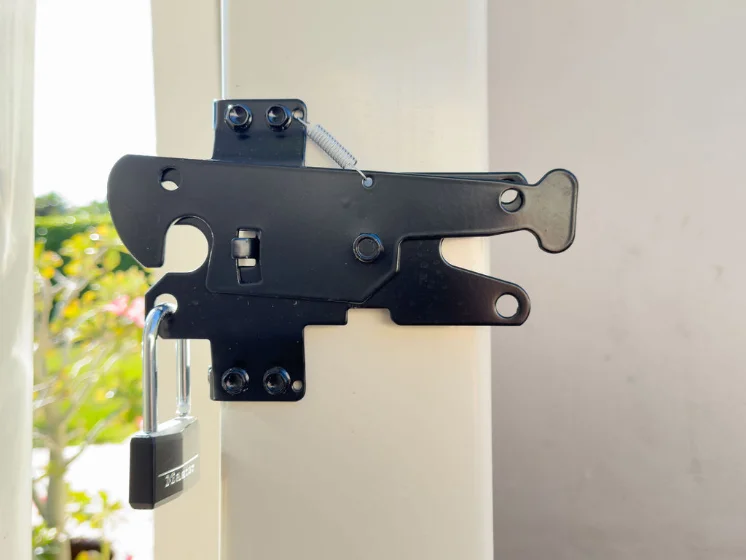
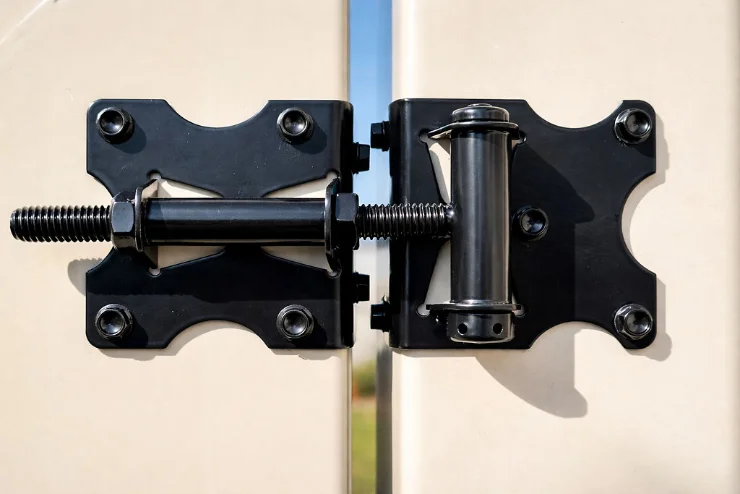
| Gate hardware | Black hinges and latches |
| Posts & caps | PVC posts, uniform caps, crisp square corners |
| Grade handling | Stepped panels following yard contour |
| Maintenance | Periodic rinse — no sealing, staining or painting |
Why Tan PVC,
Not Wood Again.
Wood was ruled out early — it's the material the homeowner was trying to escape. The real cost of a wood fence isn't the install day; it's the decade that follows. For a solid privacy screen that had to look good and stay maintenance-free on a budget, tan PVC answered every requirement at once.
For a budget-conscious privacy replacement, PVC is the sweet spot of cost, durability and appearance — and tan made it look intentional rather than default.
Clean Removal,
Clean Line.
The work was sequenced to keep the yard usable and the finished line dead-straight — old fence out in full, perimeter re-established, then panels and gates hung and dialed in.
Budget-Friendly
Isn't Cheap-Looking.
The material and a few considered details — tan color, black hardware, matching gates — delivered a premium-looking result without a premium budget. The bigger savings is long-term: with no refinishing schedule, the cost of ownership stays close to zero after install.
Every Item in the Brief.
Delivered.
The finished installation resolves every item in the original brief. The backyard is enclosed by a full-height solid screen and reads as a private room. The perimeter complements the home from the street. And the maintenance calendar that came with the old wood fence is gone for good.