Call Us: 954-371-1370 Email: info@powerfenceinc.com 902 SW 2nd Place, Pompano Beach, FL 33069
Licensed & Insured - Broward Lic. 20-F-21831-X
Palm Beach Lic. U-22529

Tamarac · Broward County

Tamarac
Fence Company

From corner lots and canal properties to custom gates, fence replacements, HOA communities and permit coordination — Power Fence helps Tamarac homeowners navigate the process from estimate to final inspection.

20+ yrsServing South Florida
500+Five-star reviews
Licensed & InsuredBroward + Palm Beach

Before you install

What homeowners should know before installing a fence in Tamarac.

In a lot of cities the first question is height. In Tamarac the first question is layout. Whether your lot is a standard interior lot, a corner, a double-frontage parcel, or backs onto a canal changes where the fence can go, what has to stay open, and who has to approve it. Here is each rule in plain English, with the measurements that matter.

01

Where can a fence go?

Fences belong along the side and rear property lines. Forward of the front line of the house — the plane where the front wall of the home sits — Tamarac generally doesn't allow a fence at all, and nothing may be installed inside the required front setback.

Tamarac generally prohibits fences from extending into the required front setback.
  • Front yard — no fence
  • Side yard — 6′ maximum
  • Rear yard — 6′ maximum
  • Rear yard adjacent to nonresidential zoning — 8′ maximum
  • The fence may not extend beyond the front line of the house
Fig. 01 — Where a fence may be located

02

Secondary street lots

If your property fronts two streets — a corner lot or a double-frontage lot — one of those frontages is the primary street and the other is secondary. Along the secondary street, fencing may be placed near that property line rather than being pushed back to the front line of the house.

Corner and double-frontage lots often have different fence opportunities than standard lots.
  • Primary street — no fence beyond the front line of the house
  • Secondary street — fencing may be placed near the property line
  • Visibility triangles still apply at the corner and at the driveway
  • Which frontage is primary is confirmed during permitting
Fig. 02 — Double frontage, plan view
03

The 25-foot accessway visibility triangle

Where your driveway meets the street, Tamarac measures 25 feet back along the accessway and 25 feet along the right-of-way and closes the triangle between them. Inside that triangle the zone between three and six feet above grade has to stay clear — so a driver leaving the driveway can see a cyclist or a child on the sidewalk.

Visibility triangles protect drivers, cyclists and pedestrians.
  • Triangle legs — 25′ along the accessway and 25′ along the right-of-way
  • Cross-visibility zone — 3′ to 6′ above grade must remain clear
  • Applies to — fences, walls and hedges alike
Fig. 03 — Accessway visibility triangle
04

The 30-foot corner visibility triangle

At the intersection itself the triangle is larger: 30 feet measured back along each right-of-way. The same 3-to-6-foot cross-visibility zone applies, which is why a corner-lot privacy fence usually has to stop short of the corner and turn — or step down — before it gets there.

Corner lots have additional visibility requirements.
  • Triangle legs — 30′ along each right-of-way
  • Cross-visibility zone — 3′ to 6′ above grade must remain clear
  • Planned from the survey, staked before any post goes in
Fig. 04 — Corner lot visibility triangle
05

Canal maintenance easements

A canal-front lot usually carries a maintenance easement along the water. Equipment has to be able to reach the bank after your fence exists — so the fence needs an 8-foot opening, and whatever closes that opening has to be removable or hinged rather than fixed in place.

Some waterfront properties require maintenance access even after the fence is installed.
  • Maintenance opening — 8′ minimum
  • Gate type — removable or hinged, never fixed
  • Easement area — must stay accessible for maintenance
  • Designed into the layout at estimate, not improvised on site
Fig. 05 — Canal maintenance access
06

Utility easements

Recorded utility easements run through more Tamarac lots than most homeowners realize — usually along a rear or side line, with water, sewer, drainage or electric underneath. A fence that encroaches into one needs Engineering Division approval before it can be permitted.

Utility easements can affect fence placement and permitting.
  • Encroachment — requires Engineering Division approval
  • Underground utilities — locate before you dig
  • Sunshine 811 — notification required before excavation
  • We read the survey and plat before a line is drawn
Fig. 06 — Utility easement, site plan
07

The Woodlands Overlay District

Properties inside the Woodlands Overlay District carry an extra layer of requirements on top of the citywide fence rules — the material list is narrower, the color list is fixed, and fencing is expected to be screened by continuous hedge.

Special zoning districts can affect fence materials and appearance.
  • Approved materials — metal, aluminum, plastic
  • Required colors — black, dark green, white, bronze
  • Screening — continuous hedge
Fig. 07 — Woodlands Overlay requirements
08

Allowed vs prohibited materials

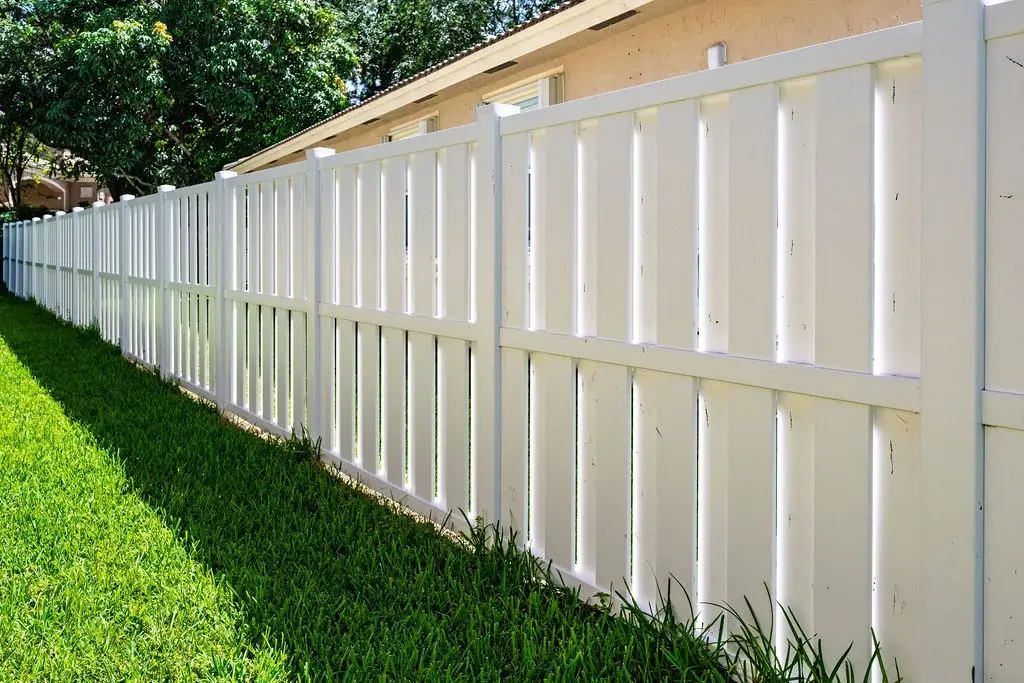
Tamarac names what it will and won't accept. Chain link is permitted, but only vinyl-coated — the bare metal version isn't. Bamboo and electrified fencing are out entirely. And on a wood fence, the finished side has to face outward, toward the neighbor or the street.

Tamarac regulates fence material and appearance, not just height.
Allowed
  • WoodFinished side faces outward
  • StoneWall construction
  • MasonryCBS wall
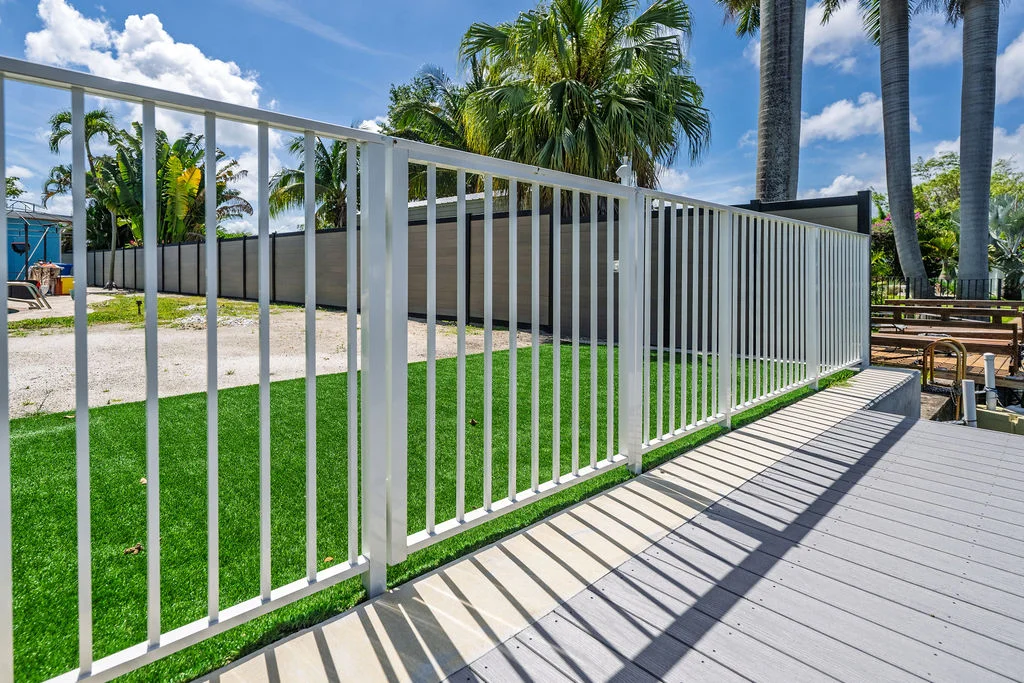
  • Ornamental metalAluminum picket
  • PVCSolid privacy panels
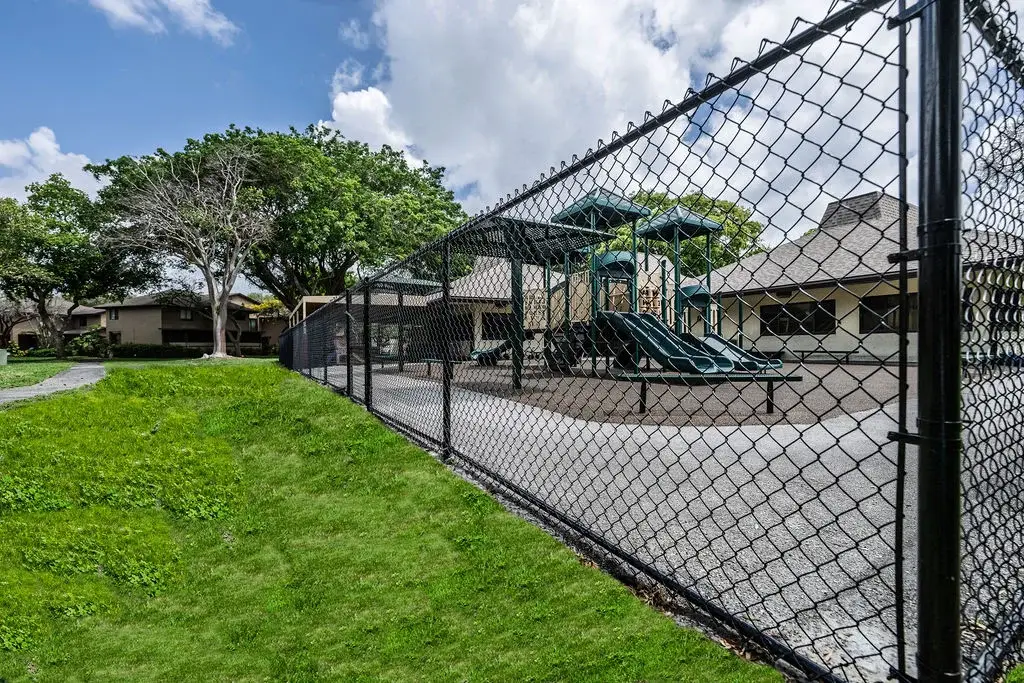
  • Vinyl-coated chain linkCoated mesh only
Prohibited
  • Electrified fenceAny residential application
  • Bare metal chain linkUncoated galvanized mesh
  • BambooAny style or height

On a wood fence, the finished side must face outward — toward the neighboring property or the right-of-way.

09

Hedge height rules

Residential hedges may reach ten feet — well above any fence you can build. But that allowance stops at the visibility triangles: inside them the 3-to-6-foot band has to stay clear, so a hedge that would be legal along the rear line can't simply continue around the corner.

Visibility requirements override hedge height allowances.
  • Residential hedge — up to 10′
  • Inside a visibility triangle — 3′ to 6′ must remain clear
  • Applies at — front areas, driveways and street corners
Fig. 09 — Hedge height & the clear band

The short version

Tamarac fence rules, at a glance.

The numbers we plan around on every Tamarac project. Every site is different — these are the typical starting points.

No FenceRequired front
setback
6′Side yard
fence
6′Rear yard
fence
8′Rear adjacent to
nonresidential
10′Residential
hedge
25′Accessway
visibility triangle
30′Corner
visibility triangle
3′–6′Cross-visibility zone
must stay clear
8′Canal maintenance
opening
811Utility locates
before digging
Vinyl Coated OnlyChain link — bare metal chain link is not permitted
Not AllowedElectrified fencing and bamboo fencing
Faces OutThe finished side of a wood fence must face outward, toward the neighboring property or right-of-way
Approval RequiredUtility easement encroachments require Engineering Division approval; canal easement gates must be removable or hinged

After you sign

What happens next.

From your first estimate to final inspection, every step has a real person attached to it — and we tell you exactly where your project is.

  1. 01 · Estimate & Site Visit

    We walk the property and locate the front line of the house, the setback, secondary frontage, driveway and corner triangles, canal and utility easements.

  2. 02 · Survey & Documentation

    We read the survey and plat against the proposed layout — easement widths, lot configuration and where a maintenance opening has to land.

  3. 03 · HOA & Permit Coordination

    Nikki runs the application through the City of Tamarac and your HOA — including Engineering review where an easement is involved.

  4. 04 · Approval Complete

    Permits in hand, HOA letter on file, easement approvals accepted, materials ordered and the install date scheduled.

  5. 05 · Installation

    Our own crews install — never unlicensed subs. Site is cleaned daily.

  6. 06 · Final Inspection

    We meet the city inspector on-site and close the permit. You get the final paperwork.

  7. 07 · Warranty & Support

    Manufacturer warranties on materials, our own workmanship guarantee and a real number to call.

Nikki, Permit Coordinator

Meet your project liaison

Nikki

HOA & Permit Coordinator

Nikki runs the back-of-house side of every Tamarac project — submitting plans to the city, preparing HOA architectural-review packages, routing easement encroachments to the Engineering Division, confirming which frontage is primary on a double-frontage lot, coordinating surveys and scheduling inspections. She's the one keeping your project moving while our crews and you focus on the install itself. If you ever wonder where things stand, she's the person to call.

The bigger picture

Understanding property layout.

Almost every fence problem we're called in to fix in Tamarac started as a layout question nobody asked. A corner lot treated like an interior lot. A second frontage nobody identified. A canal easement fenced shut with no way for equipment to reach the bank. A line drawn straight through a recorded utility easement. None of these are hard to avoid — they're just expensive to undo. So the estimate is where we read the property: the survey, the plat, the frontages, the easements, and how you actually want to use the yard five years from now.

  • Corner lots
  • Double frontage lots
  • Canal properties
  • Visibility requirements
  • Recorded easements
  • Long-term planning

Different parts of town, different plans

Tamarac is not one market.

Six areas we work in most often. Each carries its own conditions — overlay requirements, canal frontage, association review, lot configuration — that shape the plan well before we talk materials.

Overlay district

Woodlands

  • Overlay requirements
  • Hedge screening
Association

Kings Point

  • Association review
  • Fence replacements
Canal frontage

Westwood

  • Canal easements
  • Maintenance access
Original Tamarac

The Mainlands

  • Older platted blocks
  • Corner and through lots
Waterfront

Tamarac Lakes

  • Water frontage
  • Rear-yard planning
Planned community

Sunflower

  • Recorded easements
  • Gate planning

Tamarac project spotlights

Recent jobs.

A representative cross-section of the work we do in Tamarac — each one with its own constraints, its own approvals, its own outcome.

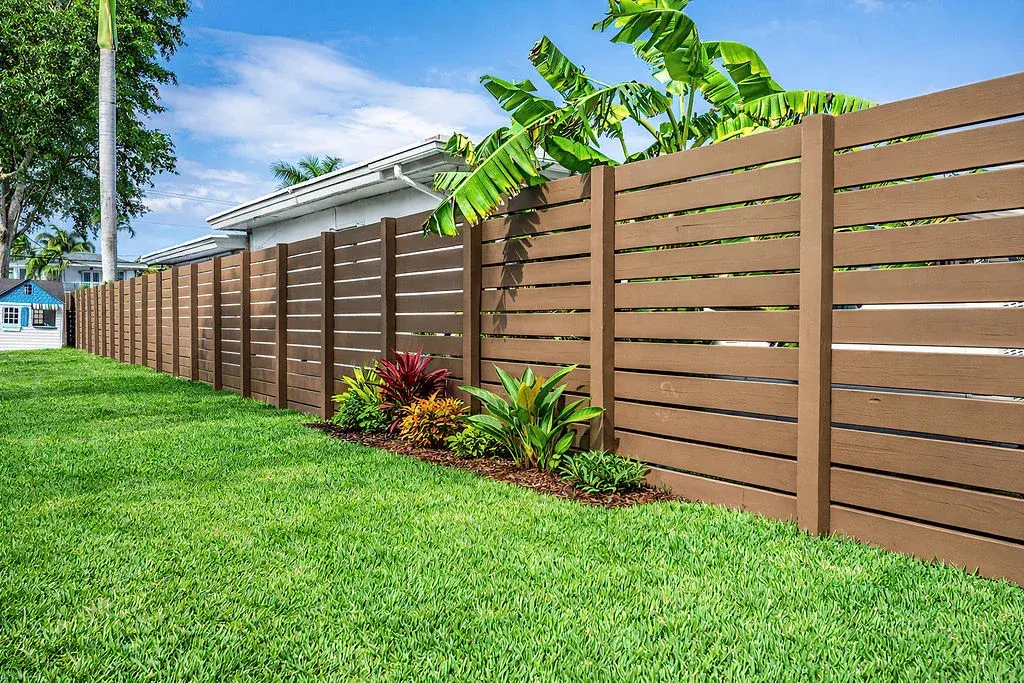
Dark Sequoia PVC
01 - Dark Sequoia PVC project

Dark Sequoia Upgrade From Wood

Project

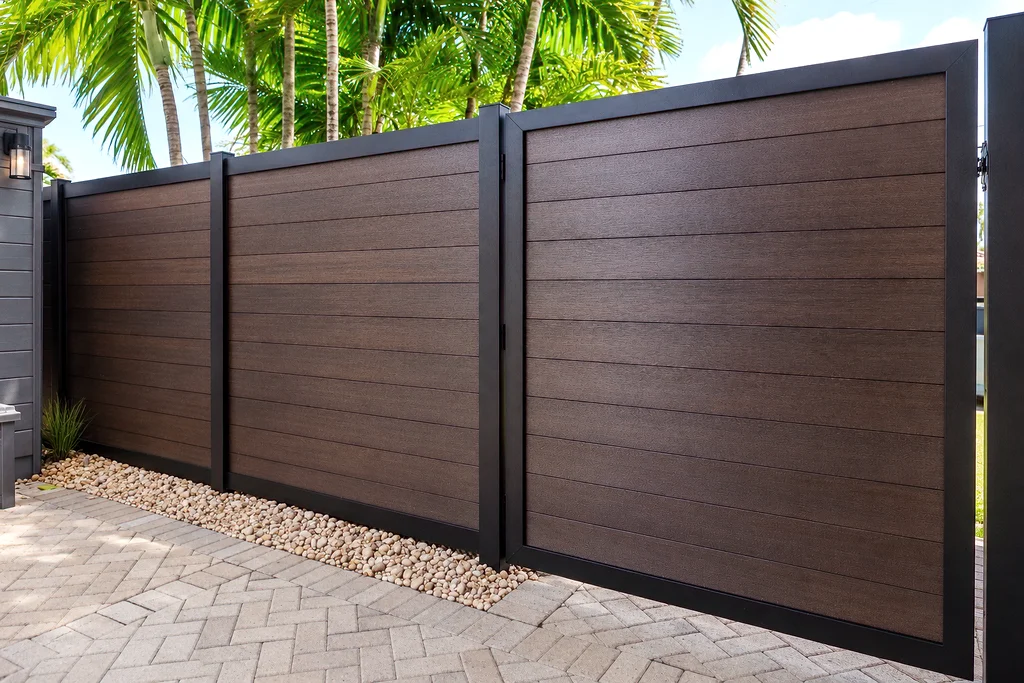
A Dark Sequoia PVC upgrade from wood, selected for color, privacy and reduced upkeep.

Case Study ->

Fence solutions for Tamarac

Every material we install.

No "preferred" Tamarac fence material here — the right answer depends on lot configuration, overlay or HOA standards, the city's material rules, easement conditions, privacy goals, maintenance expectations and budget. We talk through every option and recommend what fits the property.

01

Vinyl Fencing

Explore
02

Aluminum Fencing

Explore
03

Wood Fencing

Explore
04

Chain Link Fencing

Explore
05

Composite Fencing

Explore
06

Gates & Automation

Explore
07

Commercial Fencing

Explore
More

Not sure which?

Get a free estimate

Permits & approvals

We help navigate the process.

Surveys, site plans, easement approvals, HOA approvals, Engineering review, permit coordination and inspections — handled end to end. You're on the project, not the paperwork.

Nikki, Permit Coordinator

Coordinator

Nikki handles every Tamarac permit submission and HOA package end to end.

  1. 01

    Property surveys

    A current survey establishes property lines, the front line of the house, easements and rights-of-way. If you don't have one, we coordinate it.

  2. 02

    Site plans

    Drawn to scale — fence location, heights, gate locations, maintenance openings and the 25′ and 30′ visibility triangles.

  3. 03

    Easement approvals

    Canal and utility easements identified from the plat, with encroachments routed for approval rather than discovered at inspection.

  4. 04

    HOA approvals

    Architectural-review packages with color, material and elevation samples your board can sign off on — including overlay-district requirements.

  5. 05

    Engineering review

    Where a fence encroaches into a utility easement, the Engineering Division has to approve it. We prepare and submit that request.

  6. 06

    Permit coordination

    We submit to the City of Tamarac, respond to comments and chase approvals so you don't have to.

  7. 07

    Sunshine 811

    Utility locates called in before excavation, every job — post-hole digging counts.

  8. 08

    Inspection & closeout

    We meet the inspector on-site, walk the install, close out the permit and send you the final paperwork.

Good to know

Tamarac fence questions.

Straight answers to what Tamarac homeowners ask us before every project. Still wondering something? Just call — we're happy to talk it through.

How tall can a fence be in Tamarac?

Six feet along side and rear property lines. Where the rear yard is adjacent to nonresidential zoning, up to eight feet. Residential hedges may reach ten feet.

Can I install a fence in my front yard?

Generally no. A fence may not extend beyond the front line of the house, and nothing may be installed within the required front setback.

What is a secondary street?

On a lot that fronts two streets, one frontage is primary and the other is secondary. Along the secondary street, fencing may be placed near that property line rather than being held back to the front of the house.

What is the 25-foot visibility triangle?

It's the accessway triangle — 25 feet measured back along your driveway and 25 feet along the right-of-way. Inside it, the 3-to-6-foot band above grade must stay clear.

What is the 30-foot visibility triangle?

The corner triangle at a street intersection — 30 feet along each right-of-way, with the same 3-to-6-foot cross-visibility requirement.

Can I install a fence in a canal easement?

A fence can run along a canal-front rear line, but the maintenance easement has to stay accessible — which means an opening in the fence and a gate that can be moved.

Why do I need an 8-foot maintenance opening?

So maintenance equipment can still reach the canal bank after the fence exists. The gate closing that opening must be removable or hinged, never fixed.

Can I install bamboo fencing?

No. Bamboo fencing is prohibited in Tamarac. We can get a similar warm, screened look with compliant wood or composite.

Can I install chain link?

Yes, but vinyl-coated only. Bare metal chain link isn't permitted.

What if my fence crosses a utility easement?

An encroachment into a utility easement requires Engineering Division approval. We identify it from the plat and either redraw the line or submit the request.

Am I in the Woodlands Overlay District?

If you are, the material list narrows to metal, aluminum and plastic, the color has to be black, dark green, white or bronze, and continuous hedge screening applies. We confirm your district before designing.

How long does permitting take?

It varies with the city's review queue, HOA meeting schedules, easement approvals and whether revisions are needed. Nikki gives you a realistic window up front and keeps you posted at each step rather than promising a date we can't hit.

Have a question we didn't cover?

Ready when you are

Work with a fence company
that understands Tamarac.

Whether you're replacing an aging fence, planning around a canal property, navigating easement requirements, or coordinating permit approvals — Power Fence can guide the process from estimate to final inspection.

Financing available

Fence now. Pay over time.

Power Fence can help customers explore monthly payment options through Wisetack for eligible fence, gate, and railing projects.

UP TO 25K ELIGIBLE PROJECTS Fast customer prequal No prepayment penalty

Ask about financing

Financing subject to credit approval. Payment options are provided by Wisetack lending partners.